Is exploration a good thing?
There has never been a time when people have not wanted to explore. Whether it be exploration of the physical world or exploration for knowledge and culture, it has been important throughout history. The Italian Renaissance is a perfect example for both types of exploration. During this time, there was much exploration of the known world, but there was also a lot of internal and cultural exploration. The people of the Renaissance searched for knowledge about themselves and understanding of the human person. During this time, there was a lot of success in art, business, and politics. Because exploration of the world and of the mind can give people knowledge as well as land and territories, it is definitely a good thing.
During The Renaissance, there was a lot of exploration of the known world. People improved on the inventions and tools that made it possible for them to explore. For example, their ships became more advanced, and their maps became more reliable. The people had to explore in order to find trade routes. For example, Prince Henry, who was from Portugal, organized explorations and was able to find a trade route to India without having to cross land. Because imported products were so wanted, this exploration was very helpful to the economy. ("Renaissance - Exploration and Trade." Annenberg Media. Web. 7 May 2010. http://www.learner.org/interactives/renaissance/exploration_sub.html.) Probably the most well known explorer of the time was Christopher Columbus. Columbus was the first to explore all the way to the Americas, which one of the most important discoveries ever to be made. He set sail in 1492 with the goal of finding a western trade route to Asia. According to the journal that Columbus kept, in just three months, he landed in what he thought was India. ("Christopher Columbus: Extracts from Journal." FORDHAM.EDU. Web. 7 May 2010. http://www.fordham.edu/halsall/source/columbus1.html.) However, it was later realized that he had really landed in the Americas. This exploration was obviously important because it was the discovery of what is now America.
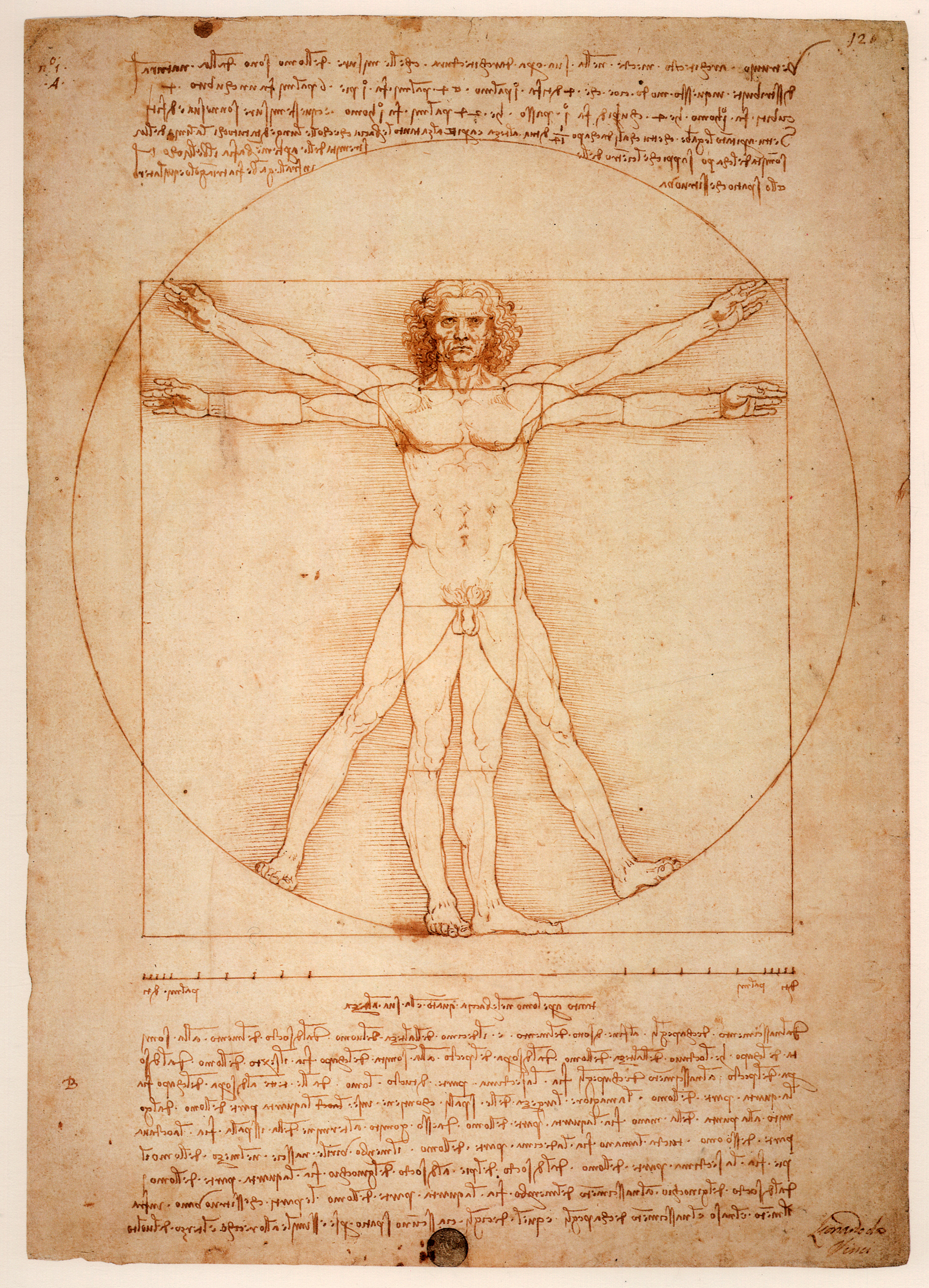
The people of the Renaissance are also known for their exploration of mind, which led to the creation of a lot of famous artwork. It is during the Renaissance that modern art is born. Artists stopped seeing the world as two-dimensional and started to add depth to their work. Before the exploration of art during the Renaissance, people would only paint religious subjects. However, Renaissance artists started to question this, and they depicted the things that they actually saw in their physical world. Their works also started to have more symbolic and complicated meanings.  Leonardo da Vinci was a Renaissance artist who explored the human person and also different styles of art. He mixed his art with science and math, and added depth to his work, which had not been done before. For example, his drawing, the Vitruvian Man shows that he searched for ways to depict exactly what he saw in a physical aspect. The exploration of artists like him was very good because it gave a whole new way to look at the world and it was the birth of modern art.
Another way the exploration was important in the Renaissance was the exploration of new architectural possibilities.  Architects explored mathematical possibilities, and the rules of western architecture were completely changed by a man named Filippo Brunelleschi. His goal was to build a freestanding dome, which had never been done before. To do this, he had to come up with his own methods and engineering plans. By exploring mathematical and physical possibilities, Filippo created the first freestanding dome ever on the Cathedral in Florence. ("Filippo Brunelleschi." PBS. Web. 7 May 2010. http://www.pbs.org/empires/medici/renaissance/brunelleschi.html.) The exploration of architecture was a very good thing because it resulted in new ways to build things that were thought to be impossible before.
Exploration has been a very good thing throughout history. It has led to the discovery of new places, and it has created new thoughts and ideas about life. Exploration of the mind has also contributed to many great art pieces. Architectural exploration has created new possibilities that were not there before. Exploration for knowledge is one of the main causes of the Renaissance, and exploration for land really helped the economy during this time. Because of all the success caused by exploring, exploration is a very good thing.
Works Cited
"Christopher Columbus: Extracts from Journal." FORDHAM.EDU. Web. 7 May 2010. http://www.fordham.edu/halsall/source/columbus1.html.
"Filippo Brunelleschi." PBS. Web. 7 May 2010. http://www.pbs.org/empires/medici/renaissance/brunelleschi.html.
"Renaissance - Exploration and Trade." Annenberg Media. Web. 7 May 2010. http://www.learner.org/interactives/renaissance/exploration_sub.html.
http://upload.wikimedia.org/wikipedia/commons/1/11/Uomo_Vitruviano.jpg
http://upload.wikimedia.org/wikipedia/commons/a/a6/View_of_the_Duomo's_dome,_Florence.jpg



Lack of primary sources on the Italian Renaissance in this paper really detracts from your argument. You need to be able to support what you say with legitimate sources.
ReplyDeleteSecondly, in terms of Columbus, the argument could be made that your view is one-sided and that colonization was detrimental to the indigenous peoples of the Americas. In making your argument it is best to present all sides and then use evidence and sources to demonstrate why your view is most valid.