Is monarchy more or less effective than democracy?
Both monarchies and democracies have proved to be effective forms of government. In a monarchy, one individual holds all the power, but in a democracy, the people elect their leaders and have more say in what happens. A monarchy could be more efficient because the leader can do what they want when they want. However, this does not mean they will be an effective government because they do not always have the interest of the people in mind. A monarchy may be able to make laws faster, but these laws do not always benefit the country because they were only passed by one individual. A democracy passes laws that are more effective in the long run because they were passed for the benefit of the people. In order to be effective, a government must put the interest of the people first; therefore a democracy is a more effective form of government than a monarchy.
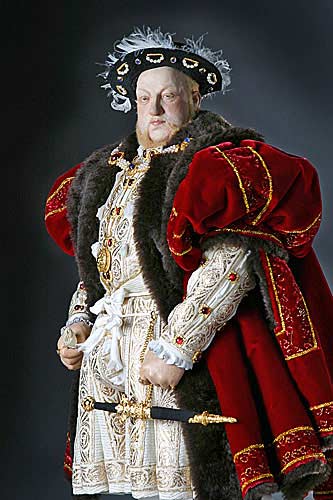
A monarchy is “supreme power or sovereignty held by a single person.” ("Monarchy” Dictionary.com. Web. 14 May 2010. http://dictionary.reference.com/browse/monarchy.) The problem with this is that the people do not have any power to elect their leader. Instead, the king or queen is chosen simply by blood relation to the dynasty. Because of this, it is easy for someone who does not really care about the country to become the ruler. For example, in Middle Age England, King Henry VIII was more concerned with his own life and his wives than he was with the welfare of England. When he became king in 1509, the England’s economy was doing well, but by the end of his reign, it was failing. This is because he spent much of England’s money on unnecessary luxuries such as the construction of forty-three new palaces. ("Henry VIII of England." Wikipedia. Web. 14 May 2010. http://en.wikipedia.org/wiki/Henry_VIII_of_England#cite_note-12.)
King Henry’s first wife was Catherina of Aragon, but when she failed to give him a son, he wanted to divorce her. The Church had the most power at that time, and so in order to get a divorce, Henry had to appeal to Pope Clement VII. The pope, however, refused to divorce them. As a drastic result, Henry VIII broke away from the Church completely. He declared, in the Act in Restraint of Appeals, that he had supreme power over the new Church of England:
“ …the body spiritual whereof having power, when any cause of the law divine happened to come in question, or of spiritual learning, then it was declared, interpreted, and showed by that part of the said body politic, called the spiritualty, now being usually called the English Church…”
(King Henry VIII. Act in Restraints of Appeals. http://home.freeuk.net/don-aitken/ast/h8a.html#145). All appeals were cut off from Rome, and he made it treason to deny his power as head of the Church. After divorcing Catherine, Henry married again and ended up having five more wives, two of which he had beheaded. ("The Life of King Henry VIII." Luminarium. Web. 14 May 2010. http://www.luminarium.org/renlit/tudorbio.htm.) With people like King Henry VIII becoming rulers, it is clear that a monarchy is definitely not the most effective form of government for a country.
Democracy is the opposite of a monarchy because it is rule by the people, as opposed to one person. The people elect their own leaders, and they have a lot of say as to what choices the leaders make. This greatly lessens the possibility of an irresponsible leader coming to power. For example, in the Unites States, the president cannot just choose to pass a law; it must go through a long approval process before it can be passed. ("Democracy." U.S. Department of State. Web. 14 May 2010. http://www.state.gov/g/drl/democ/.) Democracies are better for the people because they give them more freedom and power in what the government does. In fact, the United States was started because the people of England wanted to break away from the monarchy there.
It is difficult to tell whether a democracy or a monarchy is more “effective.” Monarchies can be effective and efficient, but because there are often rulers who do not really care what happens to their country, this is not the best form of government. It is better for the people to have a say in what goes on in their government because this will make sure that the people of the country are being benefitted. Therefore, a democracy is a more effective form of government.
Works Cited
"Democracy." U.S. Department of State. Web. 14 May 2010. http://www.state.gov/g/drl/democ/.
Henry VIII of England." Wikipedia. Web. 14 May 2010. http://en.wikipedia.org/wiki/Henry_VIII_of_England#cite_note-12.
"Henry VIII Part A." FreeUK Customer Homepages. Web. 14 May 2010. http://home.freeuk.net/don-aitken/ast/h8a.html#145.
"The Life of King Henry VIII." Luminarium. Web. 14 May 2010. http://www.luminarium.org/renlit/tudorbio.htm.
"Monarchy” Dictionary.com. Web. 14 May 2010. http://dictionary.reference.com/browse/monarchy.


There are stronger primary sources you could use on the Tudors; make sure that the sources you use best back up your argument. It is also confusing understanding exactly what you are sourcing in your section on American democracy.
ReplyDeleteAlso, consider in light of your thesis: if democracy is more effective, why did Ancient Athenian democracy fail?