Wednesday, May 26, 2010

Tuesday, May 18, 2010
Michelangelo Notes
He sculpted a 35 foot block of marble
Michelangelo was raised along side the heirs of the Medici dynasty
The sculpture was David, and it became a symbol of the Florence
The Medici's wanted to reclaim Florence, and they sent an army in to do so
Giovanni became Pope Leo X
Florence welcomed its former enemy back
Gold boy dies
Giovanni Medici had risen higher than any of his ancestors
Michelangelo was forced to paint the ceiling of the Vatican , but he never thought of himself as a painter.
He created the greatest work of art of the Renaissance
Medici's ordered Michelangelo to build magnificent tombs for their ancestors.
Machiavelli wrote a handbook for dictators
His plan backfired, the Medici refused to employ him
His name became a word for ruthless and cynical politics
The pope hears of a conspiracy against him, and he has the conspirators killed instead
He started selling papal indulgences that would cleanse your sins
Friday, May 14, 2010
Democracy or Monarchy?
Is monarchy more or less effective than democracy?
Both monarchies and democracies have proved to be effective forms of government. In a monarchy, one individual holds all the power, but in a democracy, the people elect their leaders and have more say in what happens. A monarchy could be more efficient because the leader can do what they want when they want. However, this does not mean they will be an effective government because they do not always have the interest of the people in mind. A monarchy may be able to make laws faster, but these laws do not always benefit the country because they were only passed by one individual. A democracy passes laws that are more effective in the long run because they were passed for the benefit of the people. In order to be effective, a government must put the interest of the people first; therefore a democracy is a more effective form of government than a monarchy.
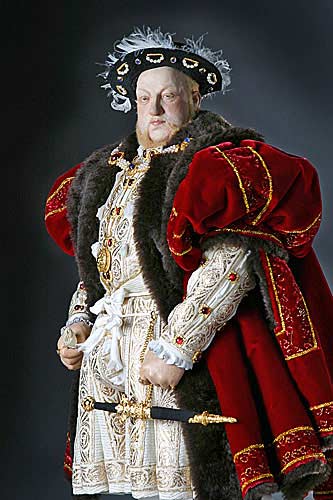
A monarchy is “supreme power or sovereignty held by a single person.” ("Monarchy” Dictionary.com. Web. 14 May 2010. http://dictionary.reference.com/browse/monarchy.) The problem with this is that the people do not have any power to elect their leader. Instead, the king or queen is chosen simply by blood relation to the dynasty. Because of this, it is easy for someone who does not really care about the country to become the ruler. For example, in Middle Age England, King Henry VIII was more concerned with his own life and his wives than he was with the welfare of England. When he became king in 1509, the England’s economy was doing well, but by the end of his reign, it was failing. This is because he spent much of England’s money on unnecessary luxuries such as the construction of forty-three new palaces. ("Henry VIII of England." Wikipedia. Web. 14 May 2010. http://en.wikipedia.org/wiki/Henry_VIII_of_England#cite_note-12.)
King Henry’s first wife was Catherina of Aragon, but when she failed to give him a son, he wanted to divorce her. The Church had the most power at that time, and so in order to get a divorce, Henry had to appeal to Pope Clement VII. The pope, however, refused to divorce them. As a drastic result, Henry VIII broke away from the Church completely. He declared, in the Act in Restraint of Appeals, that he had supreme power over the new Church of England:
“ …the body spiritual whereof having power, when any cause of the law divine happened to come in question, or of spiritual learning, then it was declared, interpreted, and showed by that part of the said body politic, called the spiritualty, now being usually called the English Church…”
(King Henry VIII. Act in Restraints of Appeals. http://home.freeuk.net/don-aitken/ast/h8a.html#145). All appeals were cut off from Rome, and he made it treason to deny his power as head of the Church. After divorcing Catherine, Henry married again and ended up having five more wives, two of which he had beheaded. ("The Life of King Henry VIII." Luminarium. Web. 14 May 2010. http://www.luminarium.org/renlit/tudorbio.htm.) With people like King Henry VIII becoming rulers, it is clear that a monarchy is definitely not the most effective form of government for a country.
Democracy is the opposite of a monarchy because it is rule by the people, as opposed to one person. The people elect their own leaders, and they have a lot of say as to what choices the leaders make. This greatly lessens the possibility of an irresponsible leader coming to power. For example, in the Unites States, the president cannot just choose to pass a law; it must go through a long approval process before it can be passed. ("Democracy." U.S. Department of State. Web. 14 May 2010. http://www.state.gov/g/drl/democ/.) Democracies are better for the people because they give them more freedom and power in what the government does. In fact, the United States was started because the people of England wanted to break away from the monarchy there.
It is difficult to tell whether a democracy or a monarchy is more “effective.” Monarchies can be effective and efficient, but because there are often rulers who do not really care what happens to their country, this is not the best form of government. It is better for the people to have a say in what goes on in their government because this will make sure that the people of the country are being benefitted. Therefore, a democracy is a more effective form of government.
Works Cited
"Democracy." U.S. Department of State. Web. 14 May 2010. http://www.state.gov/g/drl/democ/.
Henry VIII of England." Wikipedia. Web. 14 May 2010. http://en.wikipedia.org/wiki/Henry_VIII_of_England#cite_note-12.
"Henry VIII Part A." FreeUK Customer Homepages. Web. 14 May 2010. http://home.freeuk.net/don-aitken/ast/h8a.html#145.
"The Life of King Henry VIII." Luminarium. Web. 14 May 2010. http://www.luminarium.org/renlit/tudorbio.htm.
"Monarchy” Dictionary.com. Web. 14 May 2010. http://dictionary.reference.com/browse/monarchy.
Wednesday, May 12, 2010
Summarize how Elizabeth rises to the throne

Elizabeth was the daughter of King Henry VIII and Anne Boleyn. When Elizabeth was very young, her mother was beheaded because she failed to give the king a son. Because of this, Elizabeth became a bastard child, and she had to grow up without a mother. Then when Elizabeth was only thirteen, King Henry VIII grew sick and died, and Elizabeth was left an orphan. Edward Seymour became the Lord Protector of England until the younger Edward came of age. Henry's wife Katherine was remarried to Thomas Seymour, and Elizabeth and Edward had to go live with them. Elizabeth and Thomas allegedly had an affair, and so she was left in disgrace. Edward Seymour was removed from power and replaced with John Dudley. However, he became sick and died, making the heir to the throne Mary, Elizabeth's half sister. While Mary was queen, Elizabeth was somehow tied up in a conspiracy against Mary, and so Elizabeth locked up in the Tower of London. However, there was no evidence against her, and so she was let free. Mary accepted Elizabeth as the heir to the throne, and when she died on November 17, 1558, Elizabeth was crowned Queen of England.
Tuesday, May 11, 2010
Italian Renaissance
Medici Family
People searched for lost secrets from the ancient world
Ancient knowledge was carried back to Florence.
Giovanni Medici grew up in poverty
Cosimo Medici - his son
Giovanni gets bank account and the family joins an elite group of powerful Florentine families.
Scholars like Cosimo tried to decipiher the mysteries of the ancient world
Philipo Berneleski - genius
Unorthodox style - few friends
Had a vision of classical simplicity
Sparked an architectural revolution across Europe
He wanted to build a dome
He attempted to rewrite the rules of western architecture
Cosimo's father became unhealthy and died
Giovanni was laid to rest in the church built by Berneleski
Albizzi family - Medici's rivals
Cosimo's enemies wanted to see Berneleski fail
Albizzi hatched a plot to wipe out the Medici
Cosimo was captured by them and he was taken to the top of a tower
He was at the mercy of his enemies
Cosimo was accused of treason against the city, and the people voted him guilty
He faced execution
He paid his jailers to let him out, and he survived
The Medici's were banned from Florence
Berneleski was put in jail
Since the Medici bank had run most of Florence, the city was now in turmoil
Cosimo was offered control of the city of Florence, and he accepted
He took revenge on the Albizzi
Medici bank was the most profitable bank in Europe
Medici's rival was the Pazzi
Pazzi had a conspiracy against the Medici's
They knew they would have to kill both brothers
During mass on Easter, They are killed Lorenzo and Juliano
Juliano was stabbed 19 times and died, but Lorenzo was not dead
The people turn against the plotters, and they were killed
Lorenzo saved Florence from people who disliked the Medici's in the south
He took control of the city government
Leonardo Da Vinci was recognized for his artistic abilities
Monte Chelli glorified the physical world and passions
A monk thought that Lorenzo was the cause of all that was sinful in the Renaissance
Lorenzo's wife became very sick
Michelangelo is brought into the Medici family by Lorenzo.
Lorenzo and Michelangelo have a very close relationship
The monk thought Lorenzo's reign was going to lead to the downfall of Florence
In 1492, Lorenzo fell seriously ill
He turned to the Church for the future of the Medici's
Savonarola told Lorenzo that God disapproved of his life's work
Lorenzo died, fearing hell to his last breath.
Savonarola took charge, and his rules were enforced
People burned all their vanities in a huge fire
Elizabethan Age
Elizabeth I - became England's vest loved queen
She was the daughter of Henry VIII and Anne Boleyn
Anne controlled everything that Elizabeth wore
Anne miscarried a boy, and a plot was hatched to dispose of her
She was executed for adultery and treason
The rivalry between Mary and Elizabeth subsided
King Henry had 6 wives
Elizabeth was fascinated by her father's power
Henry died in 1527 and the heir was his ten year old son Edward
Edward was too young to come to power
Edward Seamore was declared protector of the realm until Edward came of age.
Elizabeth's uncle Thomas Seamore had an affair with her, and she was left in disgrace
She was 25 years old when she became queen of England
She thought that Parliament was a tiresome necessity
She assured Parliament that she would not take a husband because she did not want to surrender her independence.
Robert Dudley was interested in Elizabeth, but he was already married.
His wife was found dead, and there were rumors of foul play, so Elizabeth and Dudley could not get married.
If the queen did not marry, she would not be able to leave an heir.
Mary (Elizabeth's cousin) was constantly involved in plots against Elizabeth
Elizabeth brought Mary to trial in 1586, and she was found guilty
Mary was beheaded
Elizabeth was on the brink of a new era - The Elizabethan Age
She was extremely vain, and she wore great dresses and much jewelry
She was known as the virgin queen
Elizabeth hates changes
Plays of Shakespeare were actually written under James I
Robert Dudley died, and he had remained her closest friend in her life.
Essex was condemned to death by Elizabeth because of rebellion
When Elizabeth died, James VI of Scotland became king.
Friday, May 7, 2010
Is exploration a good thing?
Is exploration a good thing?
There has never been a time when people have not wanted to explore. Whether it be exploration of the physical world or exploration for knowledge and culture, it has been important throughout history. The Italian Renaissance is a perfect example for both types of exploration. During this time, there was much exploration of the known world, but there was also a lot of internal and cultural exploration. The people of the Renaissance searched for knowledge about themselves and understanding of the human person. During this time, there was a lot of success in art, business, and politics. Because exploration of the world and of the mind can give people knowledge as well as land and territories, it is definitely a good thing.
During The Renaissance, there was a lot of exploration of the known world. People improved on the inventions and tools that made it possible for them to explore. For example, their ships became more advanced, and their maps became more reliable. The people had to explore in order to find trade routes. For example, Prince Henry, who was from Portugal, organized explorations and was able to find a trade route to India without having to cross land. Because imported products were so wanted, this exploration was very helpful to the economy. ("Renaissance - Exploration and Trade." Annenberg Media. Web. 7 May 2010. http://www.learner.org/interactives/renaissance/exploration_sub.html.) Probably the most well known explorer of the time was Christopher Columbus. Columbus was the first to explore all the way to the Americas, which one of the most important discoveries ever to be made. He set sail in 1492 with the goal of finding a western trade route to Asia. According to the journal that Columbus kept, in just three months, he landed in what he thought was India. ("Christopher Columbus: Extracts from Journal." FORDHAM.EDU. Web. 7 May 2010. http://www.fordham.edu/halsall/source/columbus1.html.) However, it was later realized that he had really landed in the Americas. This exploration was obviously important because it was the discovery of what is now America.
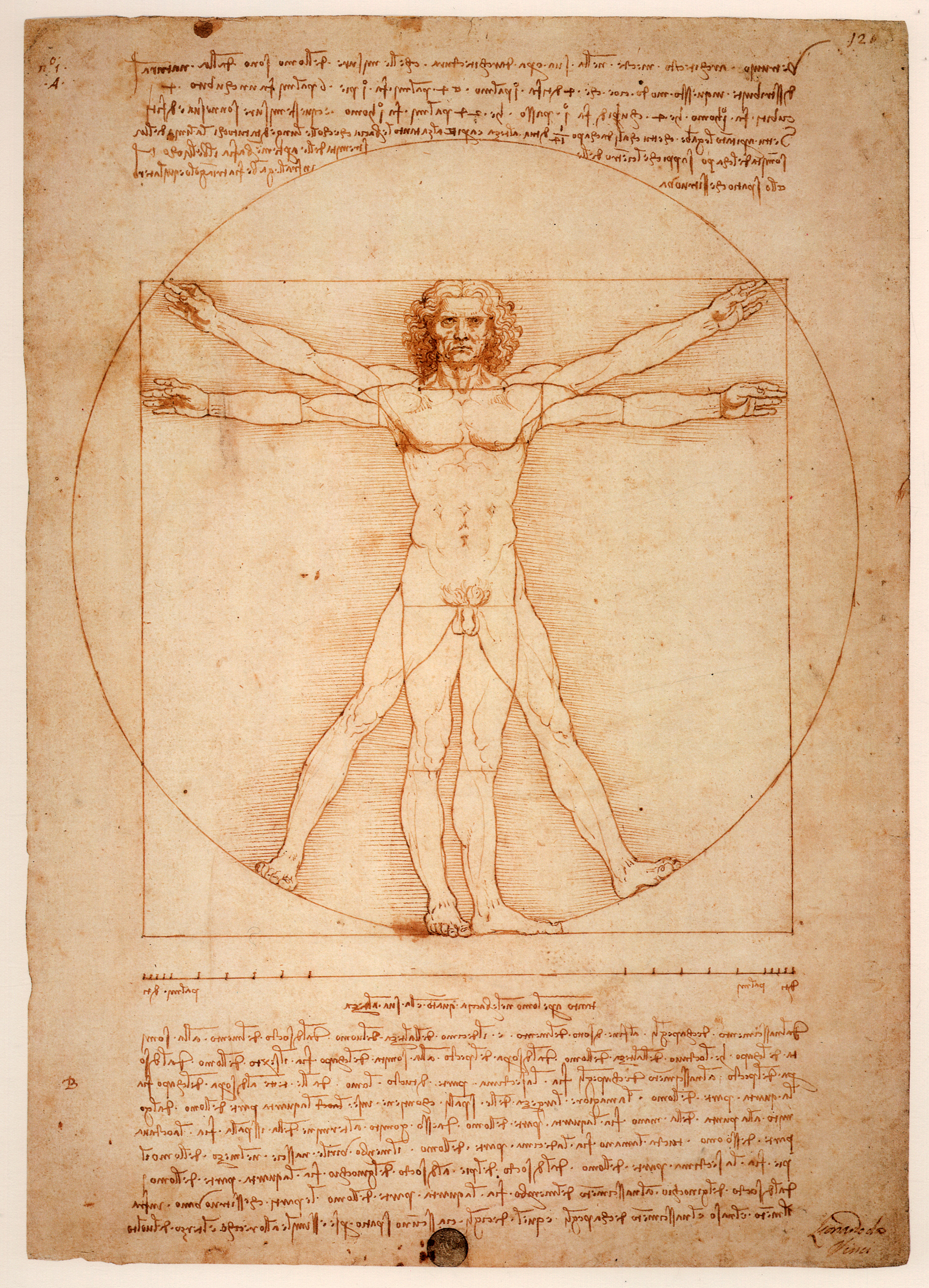
The people of the Renaissance are also known for their exploration of mind, which led to the creation of a lot of famous artwork. It is during the Renaissance that modern art is born. Artists stopped seeing the world as two-dimensional and started to add depth to their work. Before the exploration of art during the Renaissance, people would only paint religious subjects. However, Renaissance artists started to question this, and they depicted the things that they actually saw in their physical world. Their works also started to have more symbolic and complicated meanings.  Leonardo da Vinci was a Renaissance artist who explored the human person and also different styles of art. He mixed his art with science and math, and added depth to his work, which had not been done before. For example, his drawing, the Vitruvian Man shows that he searched for ways to depict exactly what he saw in a physical aspect. The exploration of artists like him was very good because it gave a whole new way to look at the world and it was the birth of modern art.
Another way the exploration was important in the Renaissance was the exploration of new architectural possibilities.  Architects explored mathematical possibilities, and the rules of western architecture were completely changed by a man named Filippo Brunelleschi. His goal was to build a freestanding dome, which had never been done before. To do this, he had to come up with his own methods and engineering plans. By exploring mathematical and physical possibilities, Filippo created the first freestanding dome ever on the Cathedral in Florence. ("Filippo Brunelleschi." PBS. Web. 7 May 2010. http://www.pbs.org/empires/medici/renaissance/brunelleschi.html.) The exploration of architecture was a very good thing because it resulted in new ways to build things that were thought to be impossible before.
Exploration has been a very good thing throughout history. It has led to the discovery of new places, and it has created new thoughts and ideas about life. Exploration of the mind has also contributed to many great art pieces. Architectural exploration has created new possibilities that were not there before. Exploration for knowledge is one of the main causes of the Renaissance, and exploration for land really helped the economy during this time. Because of all the success caused by exploring, exploration is a very good thing.
Works Cited
"Christopher Columbus: Extracts from Journal." FORDHAM.EDU. Web. 7 May 2010. http://www.fordham.edu/halsall/source/columbus1.html.
"Filippo Brunelleschi." PBS. Web. 7 May 2010. http://www.pbs.org/empires/medici/renaissance/brunelleschi.html.
"Renaissance - Exploration and Trade." Annenberg Media. Web. 7 May 2010. http://www.learner.org/interactives/renaissance/exploration_sub.html.
http://upload.wikimedia.org/wikipedia/commons/1/11/Uomo_Vitruviano.jpg
http://upload.wikimedia.org/wikipedia/commons/a/a6/View_of_the_Duomo's_dome,_Florence.jpg
Thursday, May 6, 2010
Renaissance Art

The Renaissance brought many changes, especially in art. Before the Renaissance, almost all art was about religion, and it was very two dimensional. None of it was really how it would appear in real life. However in the Renaissance, artists became more interested in the physical world. Their art became more true to what it would actually look like in real life because they used depth and shadowing. Also, instead of focusing on religion, there were many different subjects of Renaissance art. Portraits became very popular during the Renaissance, and they were very realistic paintings. Much of the art began to become complicated, and it made the viewer think about what the artist meant. Artists like Leonardo Da Vinci began to really inspect the makeup of humans in order to be able to paint them better. Renaissance art was different than Medieval art because it was much more realistic and it focused on more worldly things.
Tuesday, May 4, 2010
Early Renaissance Notes
Eastern Orthodox vs. Roman Catholic Church
Modern art is born
Art goes from being all about religion to being less two-dimensional.
Not looking at the bible and Christian theology - but looking at real life and portraits
Da Vinci - artist, scholar, architect.
Not enough just to get the image across
Wants to try new things - portrays different poses
Major archaeological discoveries take place
Much conflict between the artists and the Church because there is a lot of religious confusion
Protestant reformation
95 Thesis - statements against the Roman Catholic Church
Martin Luther Founds a new church
Henry VIII also forms his own new church in England
Hieronymus Bosch
War raged between Protestants and Catholics
The seven deadly sins are what god eternally sees us committing.
The art becomes COMPLICATED