What do you think? How did people of different classes think differently?
In the Middle Ages, there were two main divisions among social classes. Among the upper classes included the knights and nobles, and the merchants, and in the lower class were the peasants. Each one of these classes led completely different lifestyles, and that is what influences what they ‘thought’. In other words, the views they had and things that were important to them were directly based on the experiences they had. The classes’ interactions with one another affected what they thought about people above or below them on an economic and social level. People of different social classes think differently because their different experiences and lifestyles have shaped their views on life.
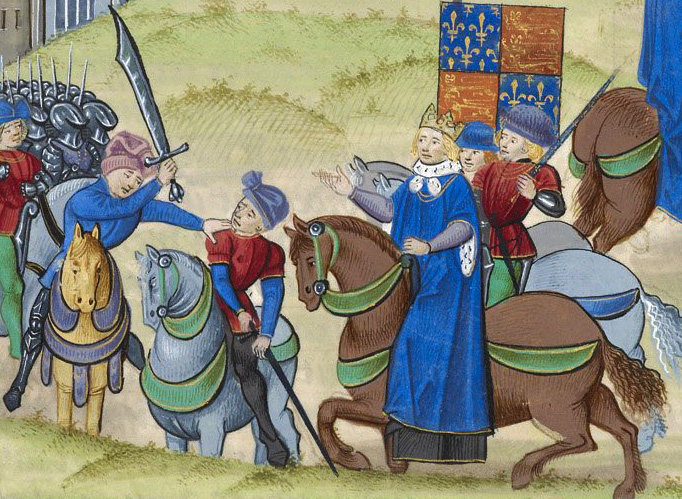
The lowest of the social classes in medieval times were the peasants and farmers. They lived a life of poverty, and most of them did not have any land of their own. They worked and lived on the lords’ land, and these serfs did not even have any political rights. ("Roles and Rights of a Peasant." Minnesota State University. Web. 30 Apr. 2010. http://www.mnsu.edu/emuseum/history/middleages/pdailylife.html.) The hard and laborious life that the peasants led made them resent the nobles and merchants, and they thought this social system was unfair. In 1381, the peasants revolted because they were tired of the way their class had to live, and they wanted to end their unfair treatment. According to the Tales from Froissart, “They were neither angels nor spirits, but men formed after the same likeness with their lords, who treated them as beasts. This they would not longer bear, but had determined to be free, and if they laboured or did any other works for their lords, they would be paid for it.” ("Froissart: Beginning of the English Peasant Revolt." Nipissing University. Web. 30 Apr. 2010. http://www.nipissingu.ca/department/history/muhlberger/froissart/peasants.htm.) The experiences and lifestyle that the peasants had caused them to think negatively towards higher social classes because the way they were treated was unfair.
On the other end of the social classes were the nobles, lords, and merchants. They were much wealthier, and their lifestyles led them to think about a lot more than just a life of labor. For example, the knights took vowels to their lords, and there was nothing more important to them than fighting for their lords. What the knights thought about most was nobility and chivalry, for this is what was important to them. The idea of their manhood was also very important to them, and they spent a lot of time hunting. They thought that all their sons should become knights too and their daughters should marry knights. ("Knighthood." Minnesota State University. Web. 30 Apr. 2010. http://www.mnsu.edu/emuseum/history/middleages/knighthood.html.)
The other members of the upper classes were the wealthy merchants. They lived in grand houses and made use of many of the newest inventions that the people of the lower class would not have had. While the peasants thought about the manual labor they had to do, the merchants thought their trade and travel. Because they travelled so much for trade, they were able to bring back many different items that were very expensive. ("Trade and Travel in the Middle Ages." Minnesota State University. Web. 30 Apr. 2010. http://www.mnsu.edu/emuseum/history/middleages/trade.html.) Although the peasants though that the social system was unfair, the people of the upper classes lived luxurious lives, and they thought little about the peasants. Instead, they thought about their nobility and wealth.
Because of their difference in lifestyle, the people of the upper class and the people of the lower class thought much differently during the Middle Ages. Because the peasants of the lower class lived under the control of the wealthier lords, they resented them and hated this feudal system. Hard work and labor was all they knew, and so that is primarily all they could ‘think’ about. On the other hand, the nobles and lords lived a life of luxury, and they hardly even considered the peasants to be people. They had a lot more to ‘think’ about than the peasants, and they were more concerned with their chivalry and honor. Peoples’ experiences and interactions with others really shape what they ‘think’.


Incomplete: no bibliography / primary sources.
ReplyDelete