Question: Explain why some scholars have called the Ancient Egyptians a "death obsessed" culture. Do you agree?
Thesis: Ancient Egyptian culture had many beliefs about death and the afterlife, building huge pyramids juts for this purpose, and scholars are right to say that it was a “death obsessed” culture.
Primary Source #1:
“Ho! king Neferkere (Pepi II)! How beautiful is this! How beautiful is this, which thy father Osiris has done for thee ! He has given thee his throne, thou rulest those of the hidden places (the dead), thou leadest their august ones, all the glorious ones follow thee”
Pyramid Texts: The Dead Pharaoh Becomes Osiris (2022-3)
http://www.mircea-eliade.com/from-primitives-to-zen/167.html
Primary Source #2:
“I have not killed.
I have not given the order to kill.
I have not inflicted pain on anyone.
I have not stolen the drink left for the gods in the temples.
I have not stolen the cakes left for the gods in the temples.
I have not stolen the cakes left for the dead in the temples”
Book of the Dead: Chapter 125 The Judgment of the dead
http://www.wsu.edu/~dee/EGYPT/BOD125.HTM
Primary Source #3:
“How sad is the descent in the Land of Silence. The wakeful sleeps, he who did not slumber at night lies still forever. The scorners say: The dwelling-place of the inhabitants of the West is deep and dark. It has no door, no window, no light to illuminate it, no north wind to refresh the heart. The sun does not rise there, but they lie every day in darkness. . . . The guardian has been taken away to the land of Infinity.
Those who are in the West are cut off, and their existence is misery, one is loathe to go to join them. One cannot recount one's experiences but one rests in one place of eternity in darkness.”
Of Silence and Darkness
http://www.mircea-eliade.com/from-primitives-to-zen/170.html
Explanation of Argument:
The Egyptian people had a god of the dead, Osiris, and they believed that when the Pharaoh died, he became Osiris. They also believed that when they died, they would be judged by the gods. A lot of their religious beliefs had to do with death, and so scholars are right in saying that they were obsessed with what would happen when they die.
Question: Considering all of the conflict of the first century BCE, was Rome better off as an 'empire' than as a republic?
Thesis: Rome was not better off as an empire because most of the emperors were power-hungry rulers who did actually care for the good of Rome.
Primary Source #1:
“But the successes and reverses of the old Roman people have been recorded by famous historians; and fine intellects were not wanting to describe the times of Augustus, till growing sycophancy scared them away. The histories of Tiberius, Caius (Caligula), Claudius, and Nero, while they were in power, were falsified through terror, and after their death were written under the irritation of a recent hatred.”
Tacitus: The Annals book 1 (109 AD)
http://www.fordham.edu/Halsall/ancient/tacitus-annals.txt
Primary Source #2:
“His acts and words were equally cruel, even when he was indulging in relaxation and given up to amusement and feasting. While he was lunching or revelling capital examinations by torture were often made in his presence, and a soldier who was an adept at decapitation cut off the heads of those who were brought from prison.”
Suetonius (69-122 CE): De Vita Caesarum: Caius Caligula (110 CE)
http://www.fordham.edu/Halsall/ancient/suetonius-caligula.html
Primary Source #3:
“Nero had the wish---or rather it had always been a fixed purpose of his---to make an end of the whole city in his lifetime. Priam he deemed wonderfully happy in that he had seen Troy perish at the same moment his authority over her ended. Accordingly, Nero sent out by different ways men feigning to be drunk, or engaged in some kind of mischief, and at first had a few fires kindled quietly and in different quarters; people, naturally, were thrown into extreme confusion, not being able to find either the cause of the trouble nor to end it; and meantime met with many strange sights and sounds. They ran about as if distracted, and some rushed one way, some another. In the midst of helping their neighbors, men would learn that their own homes were blazing. Others learned, for the first time, that their property was on fire, by being told it was burned down.”
Dio Cassius: Nero and the Great Fire (64 CE)
http://www.fordham.edu/Halsall/ancient/diocassius-nero1.html
Explanation of Argument:
As a republic, Rome did not have one all-powerful leader, but as an empire it did. Many of the emperors of the first dynasty were not good leaders, having many people put to death and Nero even burning down the city. Therefore, Rome was not better off as an empire, it was better off as a republic.
Question: Describe the importance of the Battle of Tours
Thesis: The Battle of Tours is important because if the Muslims would have been victorious against the Franks, Christianity would have been completely wiped out.
Primary Source #1:
“The Muslims planned to go to Tours to destroy the Church of St. Martin, the city, and the whole country. Then came against them the glorious Prince Charles, at the head of his whole force. He drew up his host, and he fought as fiercely as the hungry wolf falls upon the stag. By the grace of Our Lord, he wrought a great slaughter upon the enemies of Christian faith, so that---as history bears witness---he slew in that battle 300,000 men”
Chronicle of St. Denis (732 AD)
http://www.fordham.edu/halsall/source/732tours.html
Primary Source #2:
“For almost seven days the two armies watched one another, waiting anxiously the moment for joining the struggle. Finally they made ready for combat. And in the shock of the battle the men of the North seemed like North a sea that cannot be moved. Firmly they stood, one close to another, forming as it were a bulwark of ice; and with great blows of their swords they hewed down the Arabs. Drawn up in a band around their chief, the people of the Austrasians carried all before them. Their tireless hands drove their swords down to the breasts [of the foe].”
Isidore of Beja’s Chronicle (732 AD)
http://www.fordham.edu/halsall/source/732tours.html
Primary Source #3:
“Musa being returned to Damascus, the Caliph Abd-el Melek asked of him about his conquests, saying "Now tell me about these Franks---what is their nature?"
"They," replied Musa, "are a folk right numerous, and full of might: brave and impetuous in the attack, but cowardly and craven in event of defeat."”
Arabian Chronicler (732 AD)
http://www.fordham.edu/halsall/source/732tours.html
Explanation of Argument:
The Muslims were favored to win the battle against the Franks, and they were not scared of losing at all. If they would have won, the Christian faith would have been demolished.
Question: Were the Vikings barbarians?
Thesis: The Vikings’ practices were much different than those of today, but they had very organized believes and they were certainly not barbarians.
Primary Source #1:
“Then Bur's sons lifted the level land,
Mithgarth the mighty there they made;
The sun from the south warmed the stones of earth,
And green was the ground with growing leeks.
The sun, the sister of the moon, from the south
Her right hand cast over heaven's rim;
No knowledge she had where her home should be,
The moon knew not what might was his,
The stars knew not where their stations were.”
The Poetic Edda: Voluspo
http://www.sacred-texts.com/neu/poe/
Primary Source #2:
“In the beginning he established rulers, and bade them ordain fates with him, and give counsel concerning the planning of the town; that was in the place which is called Ida-field, in the midst of the town. It was their first work to make that court in which their twelve seats stand, and another, the high-seat which Allfather himself has. That house is the best-made of any on earth, and the greatest; without and within, it is all like one piece of gold; men call it Gladsheim”
The Prose Edda: Gylfaginning
http://www.sacred-texts.com/neu/pre/pre04.htm
Explanation of Argument:
The Vikings had many religious beliefs. Their actions did not make them barbarians, because they did them solely for their beliefs.
Thursday, June 10, 2010

Sunday, June 6, 2010
Wednesday, May 26, 2010
Tuesday, May 18, 2010
Michelangelo Notes
Michelangelo - didn't sleep very much
He sculpted a 35 foot block of marble
Michelangelo was raised along side the heirs of the Medici dynasty
The sculpture was David, and it became a symbol of the Florence
The Medici's wanted to reclaim Florence, and they sent an army in to do so
Giovanni became Pope Leo X
Florence welcomed its former enemy back
Gold boy dies
Giovanni Medici had risen higher than any of his ancestors
Michelangelo was forced to paint the ceiling of the Vatican , but he never thought of himself as a painter.
He created the greatest work of art of the Renaissance
Medici's ordered Michelangelo to build magnificent tombs for their ancestors.
Machiavelli wrote a handbook for dictators
His plan backfired, the Medici refused to employ him
His name became a word for ruthless and cynical politics
The pope hears of a conspiracy against him, and he has the conspirators killed instead
He started selling papal indulgences that would cleanse your sins
He sculpted a 35 foot block of marble
Michelangelo was raised along side the heirs of the Medici dynasty
The sculpture was David, and it became a symbol of the Florence
The Medici's wanted to reclaim Florence, and they sent an army in to do so
Giovanni became Pope Leo X
Florence welcomed its former enemy back
Gold boy dies
Giovanni Medici had risen higher than any of his ancestors
Michelangelo was forced to paint the ceiling of the Vatican , but he never thought of himself as a painter.
He created the greatest work of art of the Renaissance
Medici's ordered Michelangelo to build magnificent tombs for their ancestors.
Machiavelli wrote a handbook for dictators
His plan backfired, the Medici refused to employ him
His name became a word for ruthless and cynical politics
The pope hears of a conspiracy against him, and he has the conspirators killed instead
He started selling papal indulgences that would cleanse your sins
Friday, May 14, 2010
Democracy or Monarchy?
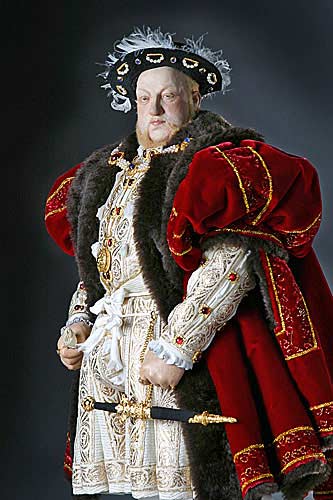
Is monarchy more or less effective than democracy?
Both monarchies and democracies have proved to be effective forms of government. In a monarchy, one individual holds all the power, but in a democracy, the people elect their leaders and have more say in what happens. A monarchy could be more efficient because the leader can do what they want when they want. However, this does not mean they will be an effective government because they do not always have the interest of the people in mind. A monarchy may be able to make laws faster, but these laws do not always benefit the country because they were only passed by one individual. A democracy passes laws that are more effective in the long run because they were passed for the benefit of the people. In order to be effective, a government must put the interest of the people first; therefore a democracy is a more effective form of government than a monarchy.
A monarchy is “supreme power or sovereignty held by a single person.” ("Monarchy” Dictionary.com. Web. 14 May 2010. http://dictionary.reference.com/browse/monarchy.) The problem with this is that the people do not have any power to elect their leader. Instead, the king or queen is chosen simply by blood relation to the dynasty. Because of this, it is easy for someone who does not really care about the country to become the ruler. For example, in Middle Age England, King Henry VIII was more concerned with his own life and his wives than he was with the welfare of England. When he became king in 1509, the England’s economy was doing well, but by the end of his reign, it was failing. This is because he spent much of England’s money on unnecessary luxuries such as the construction of forty-three new palaces. ("Henry VIII of England." Wikipedia. Web. 14 May 2010. http://en.wikipedia.org/wiki/Henry_VIII_of_England#cite_note-12.)
King Henry’s first wife was Catherina of Aragon, but when she failed to give him a son, he wanted to divorce her. The Church had the most power at that time, and so in order to get a divorce, Henry had to appeal to Pope Clement VII. The pope, however, refused to divorce them. As a drastic result, Henry VIII broke away from the Church completely. He declared, in the Act in Restraint of Appeals, that he had supreme power over the new Church of England:
“ …the body spiritual whereof having power, when any cause of the law divine happened to come in question, or of spiritual learning, then it was declared, interpreted, and showed by that part of the said body politic, called the spiritualty, now being usually called the English Church…”
(King Henry VIII. Act in Restraints of Appeals. http://home.freeuk.net/don-aitken/ast/h8a.html#145). All appeals were cut off from Rome, and he made it treason to deny his power as head of the Church. After divorcing Catherine, Henry married again and ended up having five more wives, two of which he had beheaded. ("The Life of King Henry VIII." Luminarium. Web. 14 May 2010. http://www.luminarium.org/renlit/tudorbio.htm.) With people like King Henry VIII becoming rulers, it is clear that a monarchy is definitely not the most effective form of government for a country.
Democracy is the opposite of a monarchy because it is rule by the people, as opposed to one person. The people elect their own leaders, and they have a lot of say as to what choices the leaders make. This greatly lessens the possibility of an irresponsible leader coming to power. For example, in the Unites States, the president cannot just choose to pass a law; it must go through a long approval process before it can be passed. ("Democracy." U.S. Department of State. Web. 14 May 2010. http://www.state.gov/g/drl/democ/.) Democracies are better for the people because they give them more freedom and power in what the government does. In fact, the United States was started because the people of England wanted to break away from the monarchy there.
It is difficult to tell whether a democracy or a monarchy is more “effective.” Monarchies can be effective and efficient, but because there are often rulers who do not really care what happens to their country, this is not the best form of government. It is better for the people to have a say in what goes on in their government because this will make sure that the people of the country are being benefitted. Therefore, a democracy is a more effective form of government.
Works Cited
"Democracy." U.S. Department of State. Web. 14 May 2010. http://www.state.gov/g/drl/democ/.
Henry VIII of England." Wikipedia. Web. 14 May 2010. http://en.wikipedia.org/wiki/Henry_VIII_of_England#cite_note-12.
"Henry VIII Part A." FreeUK Customer Homepages. Web. 14 May 2010. http://home.freeuk.net/don-aitken/ast/h8a.html#145.
"The Life of King Henry VIII." Luminarium. Web. 14 May 2010. http://www.luminarium.org/renlit/tudorbio.htm.
"Monarchy” Dictionary.com. Web. 14 May 2010. http://dictionary.reference.com/browse/monarchy.
Wednesday, May 12, 2010
Summarize how Elizabeth rises to the throne

Elizabeth was the daughter of King Henry VIII and Anne Boleyn. When Elizabeth was very young, her mother was beheaded because she failed to give the king a son. Because of this, Elizabeth became a bastard child, and she had to grow up without a mother. Then when Elizabeth was only thirteen, King Henry VIII grew sick and died, and Elizabeth was left an orphan. Edward Seymour became the Lord Protector of England until the younger Edward came of age. Henry's wife Katherine was remarried to Thomas Seymour, and Elizabeth and Edward had to go live with them. Elizabeth and Thomas allegedly had an affair, and so she was left in disgrace. Edward Seymour was removed from power and replaced with John Dudley. However, he became sick and died, making the heir to the throne Mary, Elizabeth's half sister. While Mary was queen, Elizabeth was somehow tied up in a conspiracy against Mary, and so Elizabeth locked up in the Tower of London. However, there was no evidence against her, and so she was let free. Mary accepted Elizabeth as the heir to the throne, and when she died on November 17, 1558, Elizabeth was crowned Queen of England.
Tuesday, May 11, 2010
Italian Renaissance
Medici Family
People searched for lost secrets from the ancient world
Ancient knowledge was carried back to Florence.
Giovanni Medici grew up in poverty
Cosimo Medici - his son
Giovanni gets bank account and the family joins an elite group of powerful Florentine families.
Scholars like Cosimo tried to decipiher the mysteries of the ancient world
Philipo Berneleski - genius
Unorthodox style - few friends
Had a vision of classical simplicity
Sparked an architectural revolution across Europe
He wanted to build a dome
He attempted to rewrite the rules of western architecture
Cosimo's father became unhealthy and died
Giovanni was laid to rest in the church built by Berneleski
Albizzi family - Medici's rivals
Cosimo's enemies wanted to see Berneleski fail
Albizzi hatched a plot to wipe out the Medici
Cosimo was captured by them and he was taken to the top of a tower
He was at the mercy of his enemies
Cosimo was accused of treason against the city, and the people voted him guilty
He faced execution
He paid his jailers to let him out, and he survived
The Medici's were banned from Florence
Berneleski was put in jail
Since the Medici bank had run most of Florence, the city was now in turmoil
Cosimo was offered control of the city of Florence, and he accepted
He took revenge on the Albizzi
Medici bank was the most profitable bank in Europe
Medici's rival was the Pazzi
Pazzi had a conspiracy against the Medici's
They knew they would have to kill both brothers
During mass on Easter, They are killed Lorenzo and Juliano
Juliano was stabbed 19 times and died, but Lorenzo was not dead
The people turn against the plotters, and they were killed
Lorenzo saved Florence from people who disliked the Medici's in the south
He took control of the city government
Leonardo Da Vinci was recognized for his artistic abilities
Monte Chelli glorified the physical world and passions
A monk thought that Lorenzo was the cause of all that was sinful in the Renaissance
Lorenzo's wife became very sick
Michelangelo is brought into the Medici family by Lorenzo.
Lorenzo and Michelangelo have a very close relationship
The monk thought Lorenzo's reign was going to lead to the downfall of Florence
In 1492, Lorenzo fell seriously ill
He turned to the Church for the future of the Medici's
Savonarola told Lorenzo that God disapproved of his life's work
Lorenzo died, fearing hell to his last breath.
Savonarola took charge, and his rules were enforced
People burned all their vanities in a huge fire
Subscribe to:
Comments (Atom)
