Friday, April 30, 2010

What do you think?


What do you think? How did people of different classes think differently?

In the Middle Ages, there were two main divisions among social classes. Among the upper classes included the knights and nobles, and the merchants, and in the lower class were the peasants. Each one of these classes led completely different lifestyles, and that is what influences what they ‘thought’. In other words, the views they had and things that were important to them were directly based on the experiences they had. The classes’ interactions with one another affected what they thought about people above or below them on an economic and social level. People of different social classes think differently because their different experiences and lifestyles have shaped their views on life.

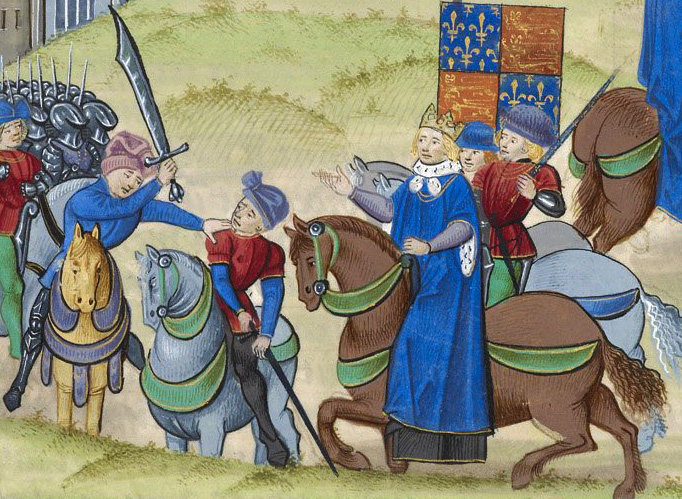
The lowest of the social classes in medieval times were the peasants and farmers. They lived a life of poverty, and most of them did not have any land of their own. They worked and lived on the lords’ land, and these serfs did not even have any political rights. ("Roles and Rights of a Peasant." Minnesota State University. Web. 30 Apr. 2010. http://www.mnsu.edu/emuseum/history/middleages/pdailylife.html.) The hard and laborious life that the peasants led made them resent the nobles and merchants, and they thought this social system was unfair. In 1381, the peasants revolted because they were tired of the way their class had to live, and they wanted to end their unfair treatment. According to the Tales from Froissart, “They were neither angels nor spirits, but men formed after the same likeness with their lords, who treated them as beasts. This they would not longer bear, but had determined to be free, and if they laboured or did any other works for their lords, they would be paid for it.” ("Froissart: Beginning of the English Peasant Revolt." Nipissing University. Web. 30 Apr. 2010. http://www.nipissingu.ca/department/history/muhlberger/froissart/peasants.htm.) The experiences and lifestyle that the peasants had caused them to think negatively towards higher social classes because the way they were treated was unfair.

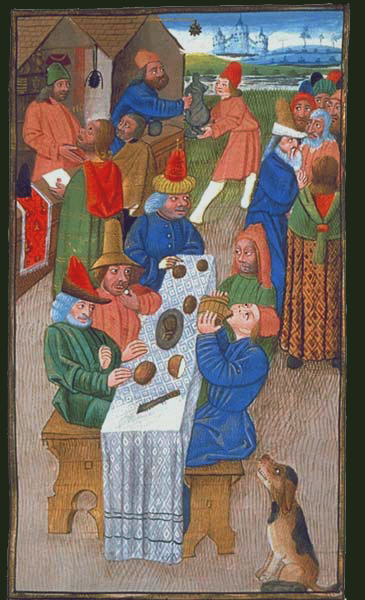
On the other end of the social classes were the nobles, lords, and merchants. They were much wealthier, and their lifestyles led them to think about a lot more than just a life of labor. For example, the knights took vowels to their lords, and there was nothing more important to them than fighting for their lords. What the knights thought about most was nobility and chivalry, for this is what was important to them. The idea of their manhood was also very important to them, and they spent a lot of time hunting. They thought that all their sons should become knights too and their daughters should marry knights. ("Knighthood." Minnesota State University. Web. 30 Apr. 2010. http://www.mnsu.edu/emuseum/history/middleages/knighthood.html.)

The other members of the upper classes were the wealthy merchants. They lived in grand houses and made use of many of the newest inventions that the people of the lower class would not have had. While the peasants thought about the manual labor they had to do, the merchants thought their trade and travel. Because they travelled so much for trade, they were able to bring back many different items that were very expensive. ("Trade and Travel in the Middle Ages." Minnesota State University. Web. 30 Apr. 2010. http://www.mnsu.edu/emuseum/history/middleages/trade.html.) Although the peasants though that the social system was unfair, the people of the upper classes lived luxurious lives, and they thought little about the peasants. Instead, they thought about their nobility and wealth.

Because of their difference in lifestyle, the people of the upper class and the people of the lower class thought much differently during the Middle Ages. Because the peasants of the lower class lived under the control of the wealthier lords, they resented them and hated this feudal system. Hard work and labor was all they knew, and so that is primarily all they could ‘think’ about. On the other hand, the nobles and lords lived a life of luxury, and they hardly even considered the peasants to be people. They had a lot more to ‘think’ about than the peasants, and they were more concerned with their chivalry and honor. Peoples’ experiences and interactions with others really shape what they ‘think’.

Wednesday, April 28, 2010

Magna Carta Notes

Magna Carta
1215
King was now bound by law, can't just do what he wants

Crusades were a failure
Children' s Crusade - many children died

Ongoing attempt to limit the power of the king

1337 - Hundred Years' War
Power for all of Europe
First Part = Edwardian War
Second Part - Caroline War
Third Part - Lancastrian War
Lasts 116 years
Rise of Nationalism

Italy remains un-unified

The Canterbury Tales - Jeffry Chaucer
Tales about pilgrims

1381 - Peasants revolt in England

Henry V leads soldiers in battle of Agincourt
He is outnumbered and he wins

The Medici family rises to prominence in Florence - 1434
1453 - Hundred Year's War ends


1455 - Johan Gutenberg - prints bible for the first time
War of Roses begins in England

Monday, April 26, 2010

Notes on England Middle Ages

Dialectic - a form of logic

Muslims and Christians cannot get along
Muslims have many works of philosophy, and they are not speaking to the Europeans

This changed the way people thought

Nationalism - the people in a country don't want to deal with people outside of their borders
Confused with patriotism

England rises in power in the 14th century
English monarchs developed dynasty

Abelard - philosophy teach
Fell in love with his student Heloise
Heloise's family hates Abelard, and she is sent to a convent
Have a relationship via love letters
WOMAN's voice in primary sources

Artwork - very religious

France becomes extremely powerful
Many cathedrals being made
More powerful than England

Friday, April 23, 2010

Can you "read" a building?

Can you “read” a building?

Throughout history, architectural styles have changed a lot, from very early huts to today’s enormous skyscrapers. Not only have buildings become more sophisticated, but they can also portray a certain culture’s practices and beliefs. There have been different styles of architecture to go along with different periods in history. These different styles are based on what was going on during that time period. By looking at the architecture of a building, you can tell what time period it came from and also what was important to the people who built it. Take Romanesque and Gothic architecture as an example. Though these styles came from similar time periods, the differences between them are unmistakable. Romanesque architecture came just before the Gothic style, and the building style is completely different, which shows that the people of the two time periods had totally different views and beliefs. Architecture is used like a language to portray culture and important beliefs of the people, and therefore it is possible to “read” a building.

In the time period of Romanesque art, about 1000 to 1500, the Church was at the center of civilization and learning. Therefore, the style in which they built their churches can show their beliefs and thoughts on what was important. Romanesque churches were made from very heavy and solid stone, so that they looked almost more like fortresses than churches. This is how the people viewed the Church, and there was one in the center of every town. They were built with huge round archways and multiple towers. The thick walls and pillars seem overbearing and oppressive. ("Romanesque Architecture." Earthlore Explorations. Web. 23 Apr. 2010. http://elore.com/Gothic/Learning/romanesque.htm.) Another part of the Romanesque style of architecture is that there were very few windows, and the ones that were built were very small. As a result, the interior of the churches were very dark. ("Romanesque Architecture." Sacred Destinations. Web. 23 Apr. 2010. http://www.sacred-destinations.com/reference/romanesque-architecture.) A very important aspect in “reading” Romanesque church buildings is the artwork that is portrayed. Much of the artwork in these churches had to do with the end of the world and God’s second coming. For example, the church at Vezelay Abbey in France has a huge depiction of Judgment Day right above the main doorway. This shows that the people of the time were very preoccupied worrying about the end of the world. By looking at and “reading” Romanesque churches, it is clear that the people had an anxiety of the unknown, and they saw their church as a stronghold.

The period of art and architecture that came after Romanesque was Gothic, and the buildings of this period show that the people’s views on life and religion changed greatly. The churches of the Gothic period were very different than Romanesque churches. The churches were built with tall and elegant pointed arches. There were also intricate designs found throughout the buildings and churches. Another big change is that the people built many huge windows, many of which were decorated with stained glass. ("Gothic Architecture." Castles. Web. 23 Apr. 2010. http://www.castles.me.uk/gothic-architecture.htm.) This allowed a lot of light to shine into the churches. This showed that the people’s attitude changed from anxiety to hope. Their change in view can also be “read” in the artwork that they put in their churches. Instead of images of the end of the world, Gothic churches were filled with depictions of hope. For example, in Niederhaslach Church, there is a statue of the angel of the Annunciation. By reading the churches of the Gothic period, it is clear that the people were no longer preoccupied, and they saw life with more hope.

The way buildings were built can show a lot about the people who built them. Architectural styles are unique to certain time periods, and by looking at buildings, the time period in which they were built can be seen. Because the people’s views are shown through their architecture and in their buildings, it is possible to look at a building and “read” it to find out about the people who built it.


Works Cited
“Gothic Architecture." Castles. Web. 23 Apr. 2010. http://www.castles.me.uk/gothic-architecture.htm.
"Romanesque Architecture." Earthlore Explorations. Web. 23 Apr. 2010. http://elore.com/Gothic/Learning/romanesque.htm.
"Romanesque Architecture." Sacred Destinations. Web. 23 Apr. 2010. http://www.sacred-destinations.com/reference/romanesque-architecture.

The Forbidden Village

There was once a small village on a large mountain. Nobody ever entered. There was a village at the base of the mountain, and nobody ever dared to venture to the village. Legend had at that if someone were to enter the village, God would be angry and send down his plague. One day, a daring group of kids decided to find out what was really in the village. They snuck out and climbed for two days. When they finally reached the village, they saw no motion and heard no noise. They thought that the village must be abandoned. However, as they entered the houses, they found, to their utter surprise, that people had lived in this village. But they were dead now, nobody was left alive. They saw corpses all around - in houses, on the floors. They did not know what to do, and they began to regret their decision to climb to the village. All over the corpses were rats and bugs. They approached one of the bodies, and as they came closer, they saw that the insects did not look normal, not healthy. Suddenly, a small red-eyed insect flew over angrily and bit the youngest boy right on the neck. The boy had a small red mark on his neck, right where he had been bitten. But it seemed to be growing, and growing fast. Within minutes, it covered his whole neck. All the other kids gathered around to see what was going on, and they all tried to stop the growth of this mysterious bug bite. The boys knew journeying to this forbidden village was a big mistake. They had to get the youngest some help, so they all ran from the village. Back down the mountain, back through the forest, and back to their village. They knew that they would get in trouble for going to the village, but they didn't care. They needed to get the youngest some help, for what started out as just a small red mark had grown to cover his whole neck and chest. All the wise elders and the best doctors in the village did not know what this was, and they did not know what to make of it. Within days, the boy's entire body was covered in red. He began to get weaker and weaker, and it was clear that he was going to die. The boy did die, but not before three other cases of this spreading red mark were found in his village. Nobody could find a way to cure this, and nobody knew what to do. They realized that this must have come from the abandoned village the kids had visited. The old legend must have been true. Just weeks later, some relatives of some of the village inhabitants came to visit. But when they got there they found exactly what the children had found in the small village on the large mountain. They were terrified at what they saw, but they did not know what to do. Nobody had survived. And as they were leaving to return to their village, one of their sons was bit by a small red-eyed insect.

Wednesday, April 21, 2010

Notes on Black Death

Plague swept Europe in the 1300's
They catapulted dead people into the city.

Rats carried the disease on ships.
No one would let ships dock when they saw that the sailors were sick.
The rats got off the ship and that is how the black death entered Europe.

People looked to the Church for spiritual support.
Within a month, the black death had spread throughout Sicily.
Priests believed that the plague was brought by God.
People thought they were witnessing the end of the world.
They believed it was hell on earth.
Few who caught the disease ever recovered.
When it reached Rome, the Pope surrounded himself with a ring of fire for weeks. This way he would not catch it because no rat could get through.

One man survived the plague and was determined to find a way to cure it.
There were two types of plague, and one was more deadly than the other.
The sick were bricked up in their houses

People accused the Jews, and they were massacred throughout Europe.

In two years, it swept across Western Europe to Scandinavia.
It killed 20 million people, a third of the population.
People believed more in God, but authority and tradition were no longer accepted without question.

Fleas transmitted the disease from rat to man.

Friday, April 16, 2010

1066: The Year In Review

Notes 4/12 - 4/16

  1. Futile System
    • Social classes
    • No social nobility - could not leave the class you were born into

  2. A cow cost five shillings.
  3. The value of your life was determined by the class into which you were born.
  4. Three classes: monks/priests, nobles/knights, and workers.
  5. Laws were very unjust, and everyone except the very rich was excluded.
  6. Sophisticated logic
  7. Supernatural events are recorded often
    • Sightings of strange creatures

  8. All living things belong to three categories - animals, humans, and spiritual beings
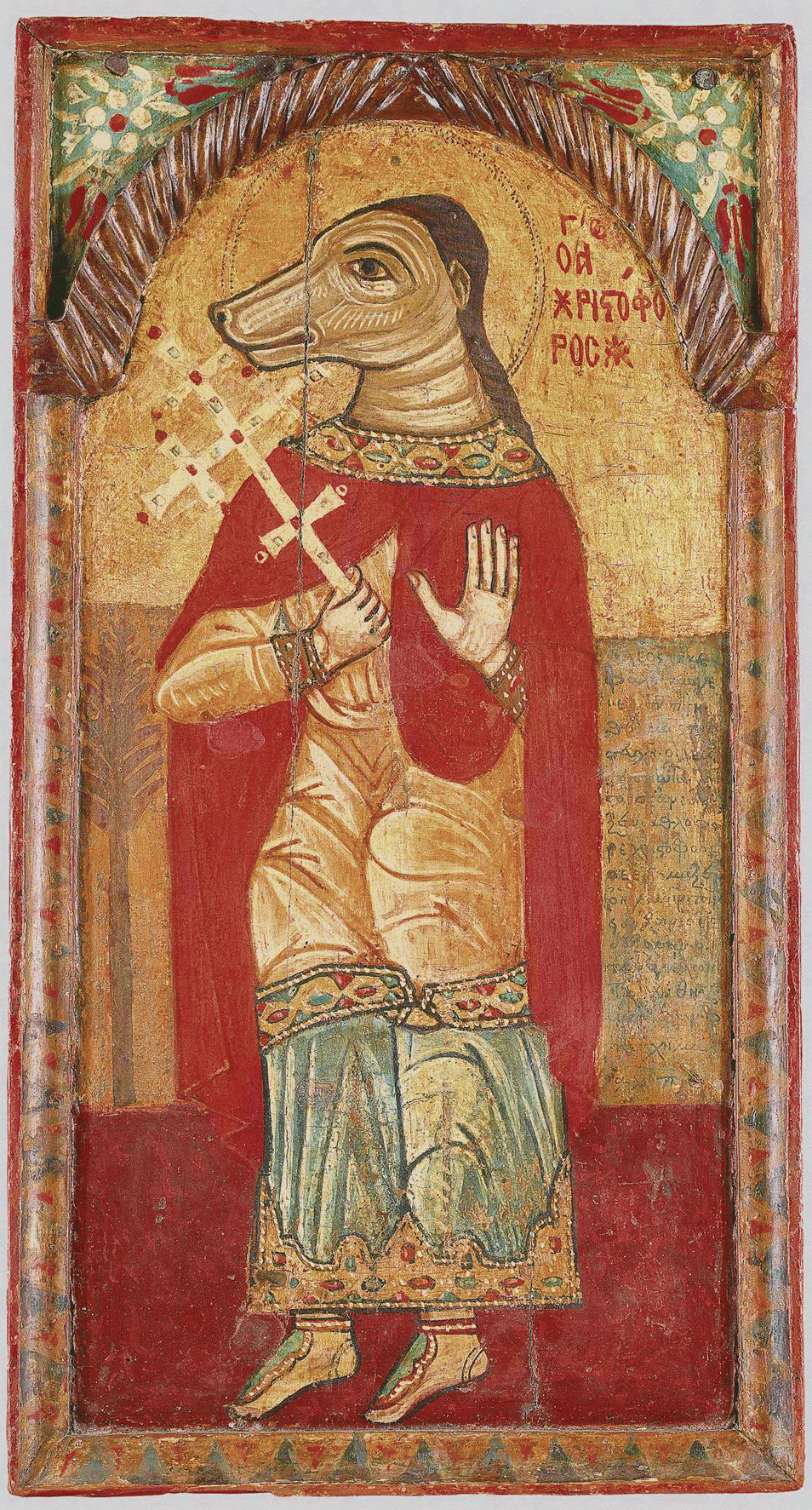
  9. They believed in weird creatures like "Dog heads"
  10. Change from writing on papyrus to animal hide.
  11. Books were called manuscripts - written on animal hide
  12. Books were valuable and rare because they were tedious to write out.
  13. Capetian Dynasty - allied relationship with the church
  14. The CHURCH - the MOST powerful leader in Europe.

  15. Pope Urban II calls for the first Crusade in 1095.
  16. Jerusalem was the center of the world in Medieval mind.
  17. First Crusade is a complete failure.
  18. Romanesque art - 1000-1100
  19. 1100-1400 - Gothic art
  20. Churches were built like fortresses and were the center of the town
  21. Romanesque - round archways, dark and oppressive - judgment and death
  22. Goth - images of light - life and hope

Thursday, April 15, 2010

The Medieval Imagination


The people of the early Medieval times seem to have had very wild imaginations. They believed in many strange creatures that they had no proof even existed. This is because they were living in anxiety about what would happen when they reached the year 1000, so it is not surprising that they made up strange explanations for the things that happened. An example of the strange creatures they believed in is the Dogheads. These were creatures that had the body and soul of a human but the head of a dog. One of these had never actually been seen, but they believed strongly in these creatures none the less. They debated about what they should do if they were to meet one, and if they should preach to them. The people even named one of them a saint in the church. They also believed that solar and lunar eclipses were a divine sign from God, despite knowing their physical causes. The people of the Medieval age believed in many strange things that seem ridiculous to the people of today, and they definitely had big imaginations.


http://medievalhistory.suite101.com/article.cfm/book_review_author_robert_bartlett

http://www.mythfolklore.net/medieval_latin/06_augciv/supp/christopher.htm

Tuesday, April 13, 2010

Power and Inequality


The Medieval ideas about power and equality were far different than the ideas of today. Today, most believe that all people are equal and should have equal opportunities. However, in Medieval times, they believed that once you were born into a class, whether it be peasant or noble, you were a member of that class your whole life. No matter what you did, you could not move up or down on the ladder of social classes. The upper class felt that their lives were more valuable than those of the lower class. Though peasants and serfs worked much harder than the nobles and knights, their lives were not worth as much. Equality was definitely not a part of the Medieval age, considering that their entire social system was based on inequality.

http://library.thinkquest.org/10949/fief/hifeudal.html