Friday, February 26, 2010

Does Power Corrupt?


Power is “the possession of control or command over others.” ("Power." Dictionary.com. Web. 26 Feb. 2010. http://dictionary.reference.com/browse/power.) Because civilizations need someone to lead them, throughout history, it has been necessary to give power to a single person or group. However, if too much power is put into one person’s hands, it can prove to be corruptive. Too much power can cause a person to make poor decisions based on their desire for more power. Once a person has authority, he will want more and it will never be enough. Also, if a leader has a great deal of power, he will think that he can do anything he wants and get away with it. Though power does not always corrupt, it often does, especially if it falls into the wrong hands or if too much is given to one individual.

History shows us many examples of leaders who were corrupted by power. One of these individuals is Alexander the Great, who eventually dominated the entire known world. Alexander’s father was King Philip II of Macedonia, so he possessed substantial power since he was quite young. When he was only a teenager, he was given complete authority over the country while his father was away. The boy was able to assemble an entire army and stultify a group of dangerous rebels. He even named their captured base after himself, which shows that he wanted to prove his authority. Shortly after this, Philip made him a commander in his army invading Greece, and Alexander did not let his father down. ("Alexander the Great (Alexander of Macedon) Biography." History of Macedonia and the Macedonian Nation. Web. 26 Feb. 2010. http://www.historyofmacedonia.org/AncientMacedonia/AlexandertheGreat.html.) These first successful experiences with power at such a young age gave him a longing for more and probably contributed to his gradual corruption.

When King Philip II was assassinated, Alexander became the king of Macedonia. As the new ruler, he had to make his authority known and work to suppress rebellions in nearby regions, including the Thebans, the Thracian, and the Illyrians. After he restored Macedonian rule, Alexander entered Persia and declared war. He first conquered all the states in Asia Minor and continued south down the coast of the Mediterranean. In Syria, Alexander defeated the Persian King Darius III at the Battle of Issus. The Macedonians travelled into Egypt, and soon Alexander had power over the whole coast. He went on to conquer Babylon and Persepolis, the capital of Persia. He ended up dying in Babylon, but not before he had conquered most of Asia. ("The Conquests of Alexander the Great." Oracle ThinkQuest Library. Web. 27 Feb. 2010. http://library.thinkquest.org/20176/alexander.htm.) Alexander the Great was clearly very successful in his time, obtaining power over most of the known world.

It was precisely this power that corrupted Alexander and his decisions. His desire for power is the reason for his conquests; the more power he had, the more he desired to further his conquests. He did not conquer for the good of his people, but merely for the good of himself, in order to prove his authority and power. Many of his actions prove that Alexander was corrupted by power. One early sign that he could be falling unto corruption was the massacre at Thebes. When there were revolts in this Greek city, Alexander immediately sent an army to attack them. They broke down the city gates and destroyed the city, killing six thousand innocent people and capturing thirty thousand to be sold as slaves. ("Alexander the Great (Alexander of Macedon) Biography." History of Macedonia and the Macedonian Nation. Web. 26 Feb. 2010. http://www.historyofmacedonia.org/AncientMacedonia/AlexandertheGreat.html.) Fighting other soldiers in battle is one thing, but killing thousands of innocent citizens shows that Alexander would do almost anything to maintain power. In fact, the more power he had, the more he had to lose, and it was this fear that motivated many of his corrupt decisions.

On more than one occasion, Alexander ordered a man to be killed because he felt that his power was threatened. ("Alexander the Great (Alexander of Macedon) Biography." History of Macedonia and the Macedonian Nation. Web. 26 Feb. 2010. http://www.historyofmacedonia.org/AncientMacedonia/AlexandertheGreat.html.) For example, Philotas was the son of Parmenion, who was a trusted general of Alexander. Philotas was suspected to be part of a conspiracy against Alexander, and so Alexander did not hesitate to him put to death. Not only was Philotas killed, but Parmenion was also assassinated merely because of the plans of his son. ("Parmenion." Wikipedia, the free encyclopedia. Web. 27 Feb. 2010. http://en.wikipedia.org/wiki/Parmenion.) Another example of Alexander’s corruption for fear of losing his power is in the death of Callisthenes. This man went around openly mocking Alexander and undermining his power. Alexander did not do anything about his comments and campaigning at first. However, when a group of men attempted to assassinate the paranoid ruler, they were tortured and questioned. They revealed, without proof, that Callisthenes was part of their plans, and Alexander had no trouble believing them. The supposed conspirator was tortured and put to death. ("Histories/ Alexander the Great." Dragonrest - The Art of Marguerite Wolf. Web. 26 Feb. 2010. http://www.dragonrest.net/histories/alexander.html.) Both of these examples show that the power Alexander had made him fearful of losing it, and he would do anything to maintain it.

Alexander the Great is a perfect example to prove that power can be corruptive. His initial desire for power was what compelled his conquests. However, once he had obtained great power, his fear of losing it is what drove him to corruption. If too much power is given to one person, the longing for more and the fear of losing it can eventually corrupt anyone.

Picutre:

http://upload.wikimedia.org/wikipedia/commons/a/ac/BattleofIssus333BC-mosaic-detail1.jpg

Thursday, February 25, 2010

Greece Notes

  1. Anatolia - King of Troy, Prium, had a son, Paris. Paris met with some Greek kings.
  2. They invited all nobles and gods/goddesses to a wedding, except one goddess. She sent a golden apple that said "to the fairest."

  3. Paris was chosen to pick the fairest, and he chose Aphrodite. She said she would give him any woman as his wife, and he chose Helen, who was already married.
  4. He kidnaps her and takes her back to Troy. Greek soldiers try to get her back.
  5. They made a Trojan horse and left it outside the city and left. The horse was brought into the city, and that night, soldiers came out and burned the city down
  6. Persian Wars

  7. Herodotus - the first historian in ancient civilization
  8. Persians came up through many of the ports of the western Anatolian peninsula.
  9. They decide to invade Greece, led by Prince Xerxes.
  10. Invasion comes across the Bosphorus - they want to control the two major areas of trade.
  11. Plan is to raid and destroy the city of Athens
  12. The Greeks decide they are going to meet the Persians at Thermopylae
  13. The Greeks were vastly outnumbered and had to cut off the Persians to keep them from coming through.
  14. Their plan is to hold the Persian army for as long as possible while Athens is being evacuated.
  15. Every single Greek soldier at the battle is killed, but when the Persians reach Athens, it is empty.
  16. Lycurgus was the first of the Spartan leaders to create a system of laws, during the period of the "Age of Tyrants"
  17. Tyrant meant that one person was in charge
  18. Sparta was the dominant military power in Greece.
  19. Hoplite battle style
    • Swords with weight on the end
    • Phalanx formation - march straight (in one direction) as a square
  20. Greece was in an almost constant state of war.
  21. Battle of Salamis - Greeks destroyed Persian fleet and they were forced to go back to Persia.
  22. If Greeks would have lost the Persian Wars, it would have completely changed the course of history.
  23. 480 B.C. - Persian Wars come to a close
  24. Acropolis - Athens was built around the highest point.
  25. Theatre started in honor of the gods.
  26. Parthenon - most important temple in all of Greece
  27. Pericles - most important political leader in Athens in the classical age
    • We cannot subsist on an army alone
    • He convinces the Greeks to create a huge navy

    Peloponnesian Wars

  28. Conflict between Sparta and Athens
  29. Athens built long walls from Athens to the port.
  30. Sparta camps out outside the city walls and blocks off the trade route.
  31. The plague hits the city, and the Athenians can't go anywhere.
  32. They come to a truce and Sparta went back home, but Athens suffered greatly
  33. People felt threatened by Socrates, and they charged him of corrupting the youth
  34. They said he could be banished from the city or be put to death, and he chose to be put to death.
  35. Athens decides to get back at Sparta by attacking Sicily.
  36. Alcibiades was the one who came up with this plan.
  37. There was an act of vandalism in Athens, and Alcibiades was blamed.
  38. Alexander the Great

  39. He was born in Macedon, in the shadow of Mt. Olympus.
  40. He was born to King Philip of Macedon, who had been in a lot of wars.
  41. King Philip was assassinated when Alexander was 19, and he took the throne.
  42. The first thing he does is get revenge on the assassins
  43. He decides to take revenge on the Persians for invading during the Persian Wars.
  44. He first goes to Troy, lands on the shore, and throws a spear at the shore. He says "By this spear, I claim Persia."
  45. He ends up in a village called Gordian on the coast of Anatolia (modern day Turkey)
  46. There was a knot in an oxcart, and there was a legend that said if you could figure out how to undo the knot, you would become the ruler of the world.
  47. He realizes that it doesn't matter how the knot is undone, so he slashes it with his sword.
  48. He continues along the coast and defeats Persians along the way, and he eventually ended up in Egypt.
  49. The Egyptians worshipped him as a king because they hated Persia.
  50. He does to the Siwa Oasis because there is an oracle there. As soon as he walks into the temple,
  51. they greet him as the son of the god Aman

  52. Alexander decides to invade Persepolis in Mesopotamia. He meets the Darius, King of the Persians in the Battle of Issus in 333 B.C.
  53. Within the first minute of the battle, he rushes across the river and the Persians run away

What compels someone to lead others?


There is more than reason why someone would be compelled to lead others. Either the person has good ideas that they want to share with others, for the benefit of the people, or they have a desire for power for their own benefit. Martin Luther King, Jr., for example, was motivated to lead others because he had strong beliefs and ideas about civil rights and he wanted to see them put into action. Alexander the Great, however, was compelled to lead others because of his want for power and conquest. He travelled throughout Persia, trying to conquer the country because he wanted to control the world. Even though leaders can be motivated for different reasons, both were very successful and accomplished a lot.


http://library.thinkquest.org/20176/alexander.htm

http://www.lucidcafe.com/library/96jan/king.html


http://upload.wikimedia.org/wikipedia/commons/3/33/Obama_2009-12-01_West_Point_speech_screenshot.png

Did Alexander actually feel like he was avenging Persian wrongs?

It is clear that Alexander the Great was a strong believer in revenge because the first thing he did when he was king was get revenge for his father's assassination. However, we can also see that he had a hunger for conquer because he went around Greece forcing everybody to acknowledge that he was in charge now. I think that when Alexander first decided to invade Persia, he had revenge on his mind. He wanted to get back at the Persians for the Persian wars. They tried to conquer his country, so now he would conquer theirs. However, as he won more and more battles and conquered more of Persia, I think he lost sight of trying to get revenge. All the power he had made him want to conquer more and more. When he first started out, Alexander was trying to get revenge on the Persians, but once he had conquered so much, it became more about having the world under his control.


http://www.historyofmacedonia.org/AncientMacedonia/AlexandertheGreat.html


http://commons.wikimedia.org/wiki/File:Alexander_cuts_the_Gordian_Knot.jpg

Tuesday, February 23, 2010

Biographies of Socrates, Plato, and Aristotle


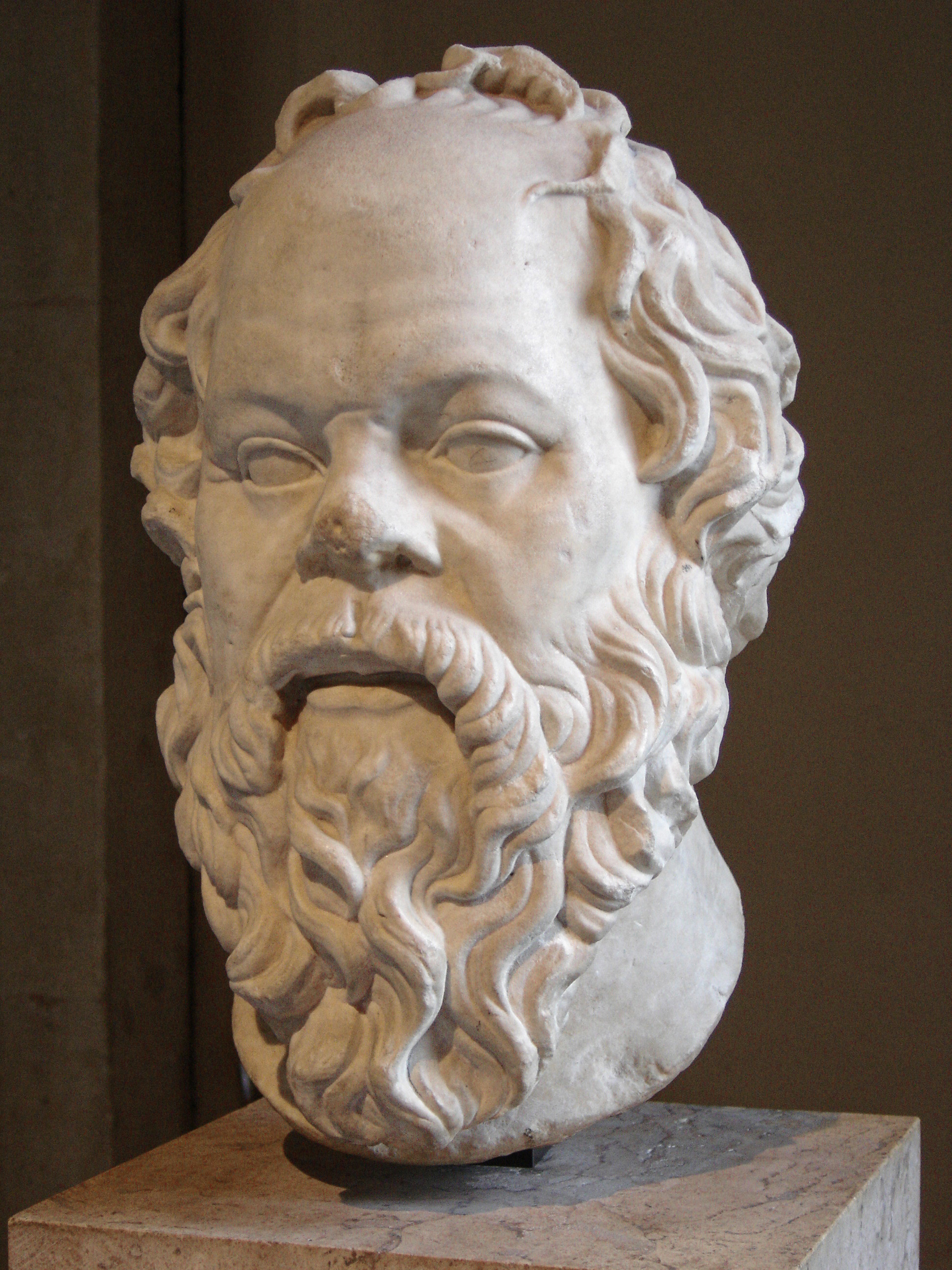
Socrates was an Ancient Greek philosopher who brought about a new logic and method of arguing. He believed himself wiser than other thinkers because he could recognize his own ignorance, while they could not. His thinking process had to do a lot with logic and reasoning. Many people in Athens grew to hate him, and he was eventually charged with corrupting the youth and put to death.

http://www.notablebiographies.com/Sc-St/Socrates.html


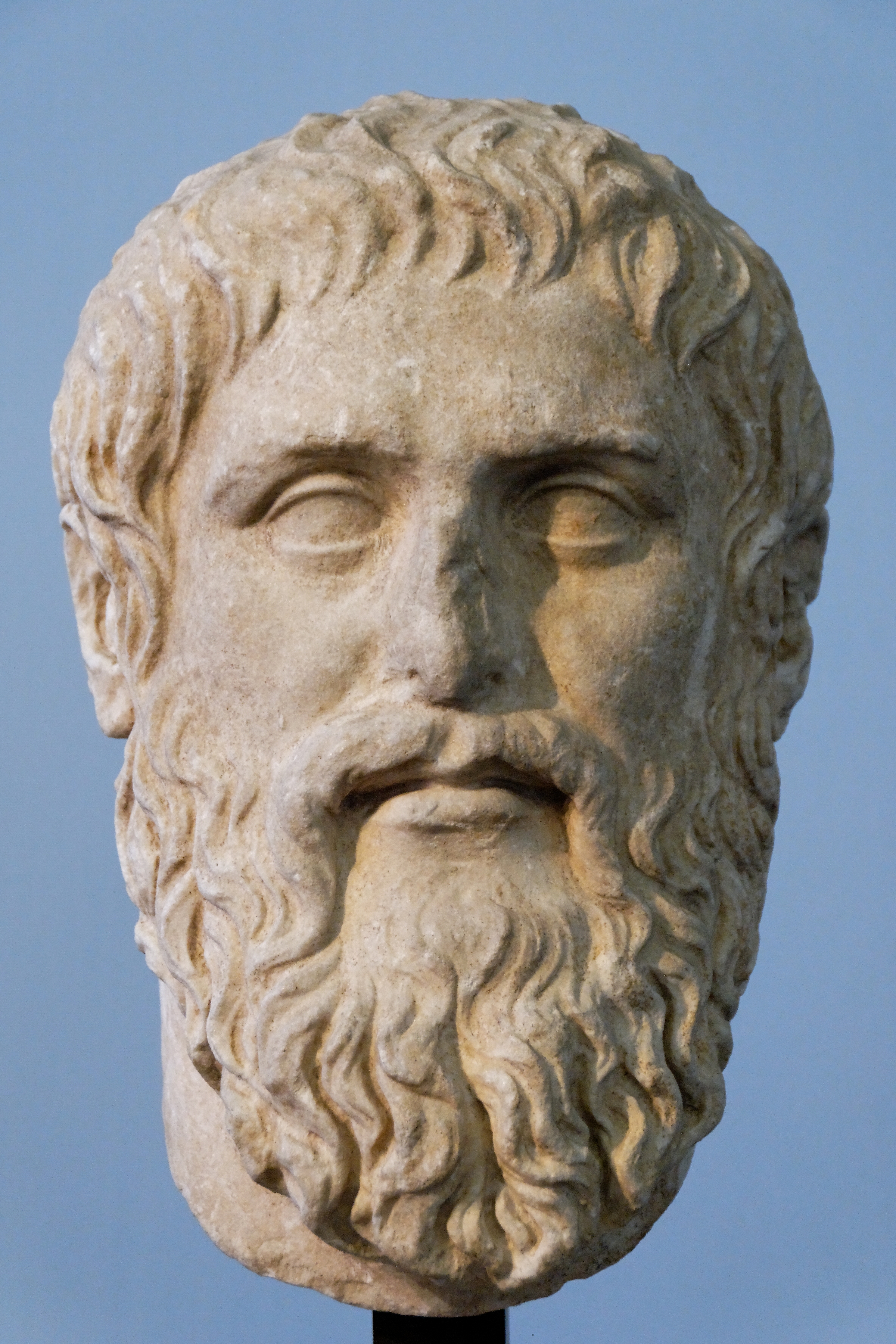
Plato was one of Socrates' students and was taught to think critically about things. He believed that it was important to know yourself completely and examine every aspect of life. He focused greatly on virtues and values. He even founded a school, The Academy, where he gave lectures. He eventually ended up dying from old age when he was about eighty.

http://library.thinkquest.org/18775/plato/biop.htm


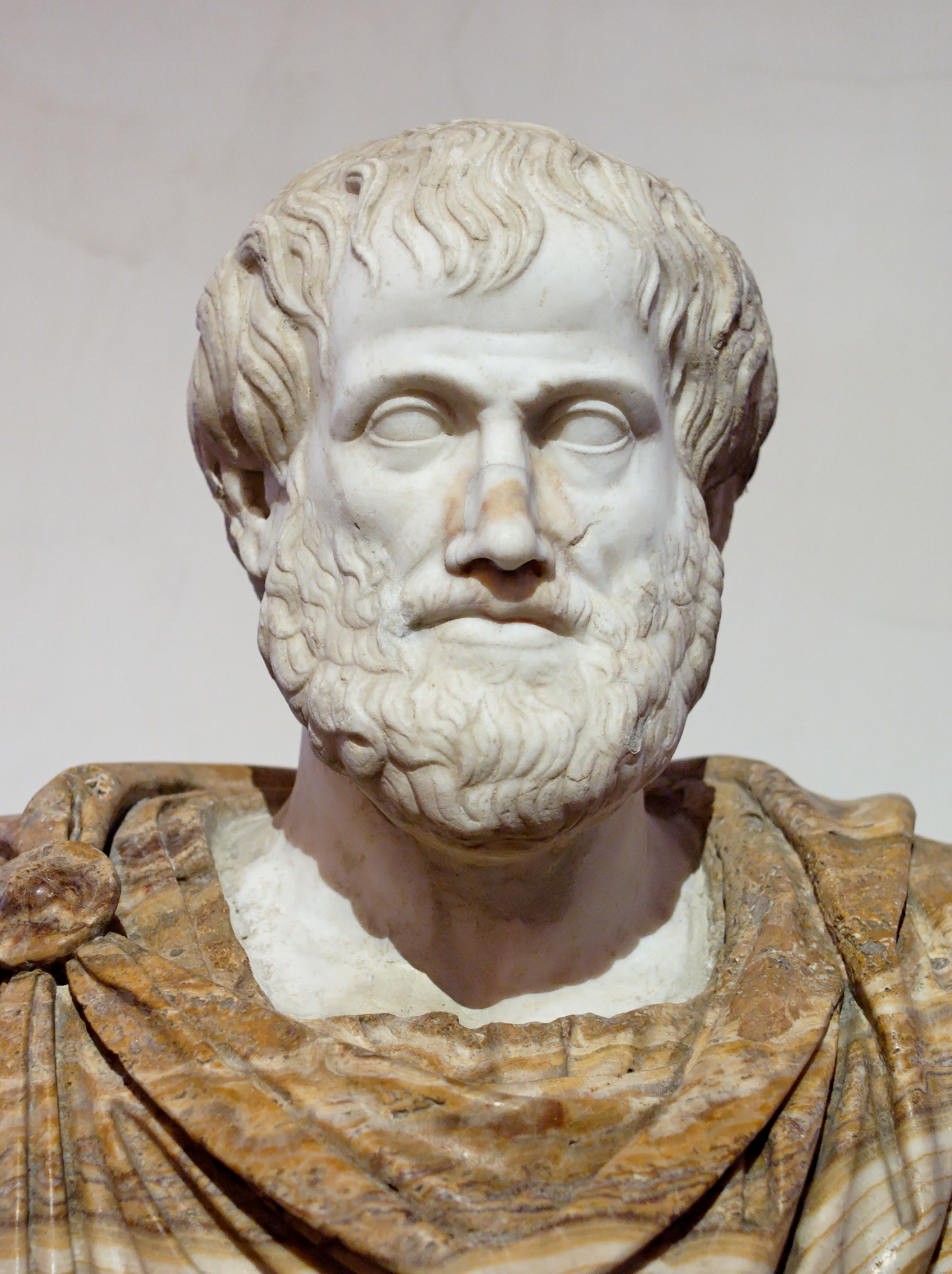
Aristotle was one of Plato's students at The Academy, and eventually became a teacher there. When Plato died, he left Athens and ended up starting his own school. The philosophies that Aristotle developed went against his former teacher's. He believed that philosophy had to be based on known facts.

http://www.sacklunch.net/biography/A/Aristotle.html

http://library.thinkquest.org/18775/aristotle/bioar.htm


http://upload.wikimedia.org/wikipedia/commons/a/a4/Socrates_Louvre.jpg

http://upload.wikimedia.org/wikipedia/commons/8/88/Plato_Silanion_Musei_Capitolini_MC1377.jpg

http://upload.wikimedia.org/wikipedia/commons/a/ae/Aristotle_Altemps_Inv8575.jpg

Friday, February 19, 2010

Is History created by 'the people' or by individuals?

Though “the people” as a whole play in important role in history, it is really created by individuals. It is true that the people help to put ideas or plans into action, but these ideas first had to be created by an individual. Once an individual has an idea, the history will happen when the people agree and put it into action. However, if it weren’t for the individual to motivate them, the people would do nothing. The people do contribute, but history is actually made by individuals and their ideas. There are many events that prove this throughout history. In Ancient Greece, for example, the Trojan War revolved around one woman, Helen. A whole war because of one individual! Other events like the Persian Wars had to have been led by kings, rulers, and leaders. If it weren’t for these individuals telling the people what to do, the wars would simply not have been able to happen.

The Trojan War – though it is uncertain whether it actually occurred – is a great example of individuals creating history. According to Greek mythology, it all started when two gods did not invite Eris, the goddess of discord, to their wedding. Out of anger, Eris sends a golden apple to the wedding, and says that it is for the fairest. Three goddesses – Hera, Athena, and Aphrodite – cannot agree on which one of them should take the apple. In order to settle the matter, Zeus says that the prince of Troy, in Anatolia, would decide which of the goddesses is the fairest. Because Aphrodite promises the prince, Paris, the most beautiful woman alive as his wife, he chooses her. Paris decides that he wants Helen of Sparta to be his wife, and he sets of to claim her. However, Helen was already married to a man named Menelaus. In Sparta, Paris is treated with much hospitality, but when Menelaus is not there, he kidnaps Helen and takes her back to Troy to marry her. ("History of the Trojan War." Stanford University. Web. 19 Feb. 2010. http://www.stanford.edu/~plomio/history.html.)

When Helen’s husband of Sparta finds out about this, he is of course very upset. He immediately set up an army to go and get his beloved wife back. There soon encountered a problem: they did not know how to get to the city of Troy. At first, they even attacked the wrong city, but they eventually found Troy. The war with Troy lasted more than nine years, but the Greeks were still not able to get into the city. Odysseus, who was a Greek warrior, had the idea to build a huge hollow statue. Once this statue of a horse was built, the soldiers hid inside and left it outside the city gates. Unaware of what the statue really was, the Trojans brought it into the city. Once inside, the Greeks came out of the horse and burned down the city, and they were able to retrieve Helen. (("History of the Trojan War." Stanford University. Web. 19 Feb. 2010. http://www.stanford.edu/~plomio/history.html.)

Some aspects of this story are definitely mythological, but it still shows the importance of individuals. The entire war revolved around getting back Helen, just one individual. Also, the war would not even have started if Paris had not taken Helen. Without Menelaus organizing the army, they would not have gone to Troy to retrieve Helen. Every battle or event, big or small, in the war had to have been led or created by an individual. For example, without Odysseus’s idea of the Trojan horse, the Greeks would not have been able to get into the Troy, and they would not have gotten Helen back. Therefore, without Odysseus, the war would not have ended.

Another example of the importance of individuals in history is the Persian Wars with Greece. Many Greek cities were under the control the Lydians. During this time, the Persians controlled much of the world, so when they conquered the Lydians, they also conquered the subsequent Greek cities. The Persians set up strict tyrannies over the Greeks. Aristagoras, one of these tyrants, with help from Athenian soldiers, set up a rebellion against the Persians. However, Darius I, King of Persia, was able to defeat the rebels and stay in control of the Greek cities. ("Ancient Greece: The Persian Wars." Washington State University. Web. 20 Feb. 2010. http://wsu.edu/~dee/GREECE/PERSIAN.HTM.). If it had not been for Aristagoras, the Greeks would not have rebelled against the Persians, and the war probably would not have started.

The Persians’ next target was Athens. When Persian fleets tried to conquer this city, however, they were defeated. This is because Miltiades, who used to be a Persian soldier, had become a warrior for Athens. Since the Greeks had someone who knew the Persians’ strategies, they were able to defend their city and avoid being conquered. Had this individual not helped the Athenians, the outcome of the battle could have been very different. After a new king came to power in Persia, Xerxes, the Persians tried once again to conquer the Athenians. Themistocles, an Athenian leader, knew that the Persians would be coming back, so he started putting together an army before they even arrived. He was able to convince everybody to help him, and by the time the Persians attacked again, the Greek army was strong. Because the Greeks were prepared, they were able to defeat the Persians again and force them to retreat. ("Ancient Greece: The Persian Wars." Washington State University. Web. 20 Feb. 2010. http://wsu.edu/~dee/GREECE/PERSIAN.HTM.) Without Themistocles’s foreseeing, the Greeks would not have been prepared for the attack and might have lost the battle. Without that one individual, Greece could have been conquered, and all Greek history after that would be changed.

Both of these examples help to show that individuals, rather than the people as a whole, are what make up history. The Trojan War was all started because of one woman, while other individuals also helped to shape the outcome of the war. The Persian war was affected by many individuals, and without any of them, the entire outcome of the war could have been completely different. While the people help put plans into action, it is the individuals that have to come up with the ideas in the first. Therefore, history is created by individuals, not by the people as a whole.

Pictures:

http://commons.wikimedia.org/wiki/File:Brad_Pitt_horse,_Çanakkale.jpg

http://commons.wikimedia.org/wiki/File:Anatolian_Soldiers_of_Xerxes_army.png


Darius I - king of the Persians

Peter - Military general


Darius I: Aristagoras really caused quite an uproar. To think, one of our own men would lead a rebellion against us! It almost cost us our control Lydia and all the Greek cities in Asia Minor.


Peter: Yes sir, but he wouldn't have been able to do it without help from the Athenians. But now that you are in command, we have control over them once again.


Darius I: I do not want Athens to get away so easily for their little rebellion… Have all of our best soldiers attack Athens so that we may also have control over them.


Peter: Yes, I will send my best men.


After the expedition…


Peter: King Darius, our soldiers were strong, but Athens has defeated them in the battle of Marathon.


Darius I: This is merely an inconvenience. We control practically the entire world, and Athens is just one city. We will conquer them in due time.


(The next king, Xerxes, also tried to conquer sent a massive attack into Greece to conquer Athens, but the Greek soldiers forced the Persians to retreat, and it remained unconquered.)

http://wsu.edu/~dee/GREECE/PERSIAN.HTM

Origins of Theatre in Athens


Theatre was popular in Greece between 550 and 220 B.C., and its origins are both religious and political. Greek theatre consisted of mainly tragedies, and only male actors could perform, playing both male and female roles. These tragedies are connected to religion because they were performed at the annual festival to honor the god Dionysus in the city of Dionysia. Three tragedies were presented to the judges, who then chose a winner. Many of the plays were about or included the gods. Because there were only three actors for each tragedy, actors had more than one role and wore masks. After they were used, the masks were offered up to Dionysus (http://en.wikipedia.org/wiki/Theatre_of_ancient_Greece). Ancient Greek theatre was connected to politics because everything had to be funded by the state, including the actors and the sets and costumes. Theatre was important to the Greeks of ancient times, and it had both religious and political aspects.

http://ablemedia.com/ctcweb/netshots/tragedy.htm

Thursday, February 18, 2010

Was Athens really a democracy?

The Ancient Greek city of Athens had what they considered to be a democracy, however it was very different than the idea of democracy today. The word democracy is actually of Greek origin. The main idea of this political system was to give the power to the people instead of favoring the wealthy. In Athens, this idea was taken more literally than today's democracies. Instead of holding elections to choose political leaders, they picked leaders directly from the 'mob'. They did this because elections tended to favor high society men, which was exactly what they did not want. The people were even given the power to vote to have a political leader exiled. This form of government favored "the people," but only adult men that were completely Athenian could actually be a leader of the government. They carried the idea of democracy to their courtrooms and even the theatre. The Athenian government was a very successful democracy, and even though this type of political system has changed a lot since the city's time, they were still considered a democracy.


http://www.bbc.co.uk/history/ancient/greeks/greekdemocracy_01.shtml

Tuesday, February 16, 2010

The Olympic Games


When the Olympic games started in Olympia in Greece in 776 B.C., they were much different than today's Olympics. The events were much different because the games first consisted of running only. Gradually, more events like boxing, wrestling, and chariot racing were added. One major difference between today's Olympic games and the games in Ancient Greece is that the Greek games were held to worship the god Zeus. It was believed that the gods chose a winner; they favored some men to others. Unlike today's games, the ancient Olympics excluded women from competing because men were thought to be superior to women. The ancient Olympics were similar to today's Olympic Games because they both involve politics. Athletes from many different regions of Greece competed to win, just like athletes from all over the world compete today. Just like today, the winners and champions were greatly revered and honored. The Olympic Games have changed a lot since they first started, but the spirit of competition remains much the same.


http://ow.ly/156BA

Friday, February 5, 2010

What is Important?

The people of Ancient Egypt had many things that were important to their culture and their survival. Probably the most important thing for their survival was the Nile River. Without it, they would have no water for their basic needs. They would not be able to farm, bathe, or even have water to drink, and their civilization would never have been able to survive. Their gods and their unique beliefs were also very important for them to develop their own culture. They believed in many different gods, all responsible for different parts of nature. Strangely, the people of Ancient Egypt believed that the most important thing was death. This is something they held of very high importance, and they believed that when they died, they began their afterlife. That is the reason they built so many huge tombs and pyramids, in order to house the pharaohs in their afterlife. Many things were very important for the Ancient Egyptian civilization, both for their basic survival and for their cultural identity and beliefs.

The Nile River was obviously crucial to the Egyptians because it was their source of water, and therefore it was their source of survival. We can see clearly that it was important to them because they divided Egypt into two regions: Upper Egypt and Lower Egypt. Upper Egypt was where the Nile started, and Lower Egypt was where the Nile formed a delta and opened up into the Mediterranean Sea. Upper Egypt was actually in the south and Lower Egypt was to the north. ("Upper and Lower Egypt." Wikipedia, the free encyclopedia. Web. 05 Feb. 2010. http://en.wikipedia.org/wiki/Upper_and_Lower_Egypt.) However, the Egyptians based the separation on the direction of the Nile’s current (from Upper to Lower Egypt), which shows that the river was centrally important to them.

The Egyptians were able to harness the river by digging canals that brought the water to their cities. One of the main things the Nile’s abundant water and resources were used for was agricultural work. This is something that the people relied on for necessary food. The land around the river was considered either black land or red land. The black land was important for farming because it is the land directly adjacent to the Nile that was made fertile by the river’s yearly flooding. The red land was the dry land that was not able to be farmed. ("Geography." Introduction. Web. 05 Feb. 2010. http://www.ancientegypt.co.uk/geography/home.html.) Every year, during late summer, the Nile would flood and fill the black land with fertile soil. The people learned how to manage the floods and control the amount of land covered and the distribution of fertile soil. After the flood, the people could plant crops like cereals, wheat, and flax. Flax was used to make their linen clothing. One important thing they grew was papyrus. This was not only a source of food, but it could be used to make things like boats. The Nile did not only give the Egyptians food from agriculture, but it was also home to many fish, which was an important source of protein. They also hunted things like birds, which lived off the Nile. (Baines, John. "Ancient History in depth: The Story of the Nile." BBC - Homepage. Web. 06 Feb. 2010. http://www.bbc.co.uk/history/ancient/egyptians/nile_01.shtml.) Without the Nile River, the Egyptians would have had no source for obtaining basic things like food and water, and therefore, it was very important to them.

Water was certainly important for their basic survival, but what did they hold important as a part of their culture? The Egyptians believed in many Gods – at least two thousand – but they had two that were more important than the others. These were Amon-Ra, the sun god, and Osiris, who was king of the underworld. The people lives revolved around their beliefs, and one thing they were very fascinated with was death. They believed that after they died, they began their afterlife, which was made possible by Osiris. Because of this belief, they spent much of their time in preparation for their next life. ("Ancient Egyptian Religion." St. Petersburg Times Online. Web. 06 Feb. 2010. http://www2.sptimes.com/Egypt/EgyptCredit.4.3.html.) In order to have a peaceful afterlife, one had to pass through the underworld. After this, they received a special kind of power that they could use to help their family. (Pinch, Geraldine. "Ancient History in depth: Ancient Egyptian Magic." BBC - Homepage. Web. 06 Feb. 2010. http://www.bbc.co.uk/history/ancient/egyptians/magic_01.shtml.) In order to keep their bodies from decaying and rotting away, Egyptians treated the dead with preservatives and wrapped them in linen. This kept the body looking lifelike during the afterlife. ("Mummification." Introduction. Web. 06 Feb. 2010. http://www.ancientegypt.co.uk/mummies/home.html.)

Because of their religious beliefs, they also thought that the pharaoh was very important. When the pharaoh died, he was thought to become the new king of the dead, Osiris. His soul, however, remained with his body during his afterlife. For this reason, he was mummified and put into a coffin in his tomb. Everything he would need during his afterlife was also put in the tomb with him. ("National Geographic: Egypt Pyramids--Facts, Photos, Diagrams." National Geographic. Web. 05 Feb. 2010. http://www.nationalgeographic.com/pyramids/pyramids.html.) The Egyptians spent many years and a lot of effort in building the pharaoh’s pyramid. They held special ceremonies in order to align the foundation of the pyramid with the north, south, east, and west. These tombs were built in the red land, the dry land. They were constructed from limestone and granite, which had to be brought down the Nile and then hauled to the building site. The laborers then built ramps and put the blocks into place. (Shaw, Ian. "Ancient History in depth: Building the Great Pyramid." BBC - Homepage. Web. 06 Feb. 2010. http://www.bbc.co.uk/history/ancient/egyptians/great_pyramid_01.shtml.) The pyramids and tombs made up mortuary cities, such as the pyramids of Giza, and they were built solely for the entombment of the pharaohs. The pyramids at Giza took as many as eighty years to build. Because of the amount of effort put into death and the afterlife, it is obvious that it was a very important part of the Egyptians way of life.


The things that the people of Ancient Egypt considered important were the things that provided them with the basic necessities for survival and the things that they believed in religiously. The Nile helped them because it gave them water, and it enabled them to use the land for agriculture. It also gave them things like fish to eat. Everything they did or made was directly or indirectly made possible by the Nile River. The people of Egypt also held religion of high importance. Almost everything they did revolved around their gods, and they had a fascination with death and afterlife. They spent much of their lives preparing for their death. In my opinion, the two most important things to the Ancient Egyptians were the Nile River and their religious beliefs about death.

Pictures:

Thursday, February 4, 2010

Egypt Notes

  • Upper Egypt - south
  • Lower Egypt - north
    • Nile flows from upper to lower Egypt.

  • Narmer Palette - The leader had ultimate power - often instilled by fear.

  • Dynasty - a succession of kings and rulers by birthright.
  • Real Egyptian statues have no space between the legs, Greek sculptures did

  • Old Kingdom: 2649 - 2150 B.C.

  • Mortuary Cities - the only reason Giza existed was for the entombment of the pharaohs

  • Death is the single most important thing in Egyptian culture.

  • Hieroglyphs are not pictures, each symbol makes a certain sound.

  • Conscription - compulsory (forced) enrollment for national service

It is only because Egypt had slaves that they had enough time to dedicate to something like building pyramids.

Why do you think so many conspiracy theories surround the pyramids and the megaliths?


There are many conspiracy theories about things like the ancient pyramids and megaliths. I think this is because they were built so long ago, and we have no real way of knowing for sure what they were used for. Architects have uncovered things that can give us a realistic idea, but we weren't there to experience it, so we cannot know for certain. Pyramids are commonly believed to be tombs for the pharaohs after their death, but some theories have arisen that try to link them to lost underground civilizations. There are many theories suggesting hidden passages and tunnels inside the pyramids that could lead to anything. I think it could be cool to believe these theories, I think they are unrealistic. Evidence has been found that shows that the pyramids were just huge tombs for the kings of their nation. I think that they came from Egyptian workers who built them for their pharaoh's afterlife, and I do not think there was any secret civilizations living inside of them.

http://ezinearticles.com/?Conspiracies:-The-Pyramid-and-the-Sphinx&id=22384

http://www.kingtutone.com/pyramids/inside/

"War is a form of technology." Agree or Disagree

"War is a conflict carried on by force of arms, as between nations between parties within a nation." I do agree with the statement that war is a form of technology. Fighting and conflicts have always occurred between civilizations, but there has not always been organized war. War includes organized violence between two groups in order to get one group to give up or surrender, or until the two groups come to an agreement. Just like other technologies, war had to develop over many years. War today has developed a lot since ancient years. Today there are many new weapons and firearms and even things like bombs that help war to become even more organized and planned. War is different than just violence because it is more organized, and I do think that it can be considered a technology.

http://en.wikipedia.org/wiki/War
http://dictionary.reference.com/browse/war

Pyramids of Ancient Egypt


In Ancient Egypt, pyramids were built as homes for the pharaohs in their afterlife. It was believed that when a pharaoh died, he became the new king of the dead, Osiris. Part of his soul, however, remained inside his body. For this reason, everything he would need in the afterlife was put in his tomb or pyramid with him. The people that built the pyramids were not slaves, they were farmers and villagers. The limestone blocks were first polished and shaped. They then pushed huge limestone and granite bricks up big ramps and put them into place. Hard laborers were not the only ones to help with the pyramids; it took architects and priests to choose locations and positions, and to align the pyramids with the starts. It took thousands of workers and many years to build the pyramids, but they knew they were helping the pharaoh live his afterlife. The first pyramids from about 2630 B.C. were step pyramids, and they continued to develop until the Great Pyramid was built in about 2550 B.C. No pyramid that came after was quite as large, and the era of pyramids ended in about 2250 B.C.

http://www.nationalgeographic.com/pyramids/pyramids.html

Wednesday, February 3, 2010